

Top 10 Industrial Automation Trends Shaping the Manufacturing Landscape in 2026
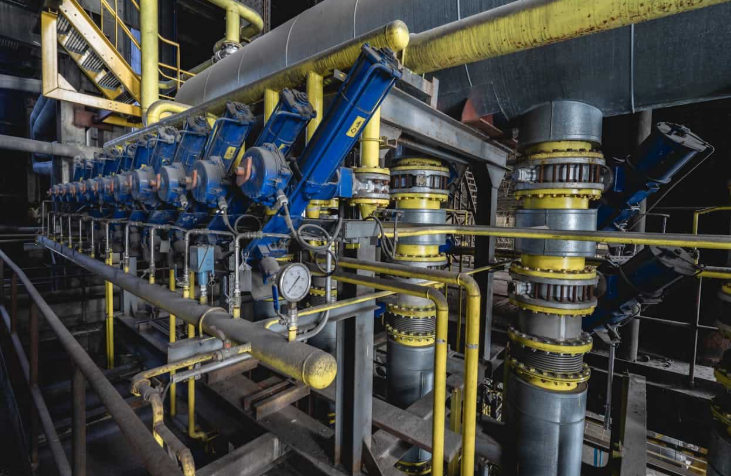
The Smart Production Solutions (SPS) fair in Nuremberg recently showcased a transformative shift in the global industrial sector. After a volatile period, the industry is entering a new era of intelligence and connectivity. This report analyzes the pivotal trends that will define factory automation and control systems throughout 2026.
Market Recovery and Revenue Growth
The industrial automation sector is showing strong signs of a robust recovery. Siemens and other industry giants report significant revenue gains following the fluctuations of 2025. This momentum suggests that manufacturers are once again prioritizing capital expenditures. However, businesses must still navigate lingering global trade barriers and supply chain complexities.
The Evolution of Software-Defined Automation (SDA)
Software-Defined Automation is transitioning from a conceptual framework into a core platform strategy. This shift decouples sophisticated control software from proprietary hardware components. As a result, engineers gain unprecedented flexibility in scaling their operations. Industry leaders like Rockwell Automation are championing this hardware-agnostic approach to modernize traditional PLC environments.
Agentic AI: Beyond Simple Automation
We are witnessing the first practical applications of "Agentic AI" within the factory floor. These Generative AI systems do more than just follow static scripts. They can autonomously plan, execute, and verify complex manufacturing tasks. Crucially, vendors still maintain human-in-the-loop protocols to ensure safety, accountability, and precision in critical DCS operations.
Edge AI and Integrated Neural Processing
Edge AI is expanding its reach beyond basic machine vision applications. Modern hardware now features integrated Neural Processing Units (NPUs) for localized high-speed computing. This advancement allows for real-time analytics directly at the machine level. Consequently, factories reduce their reliance on latency-prone cloud connections for time-sensitive decisions.
Mature Software Stacks for the Industrial Edge
The maturity of end-to-end Edge AI software stacks is simplifying deployment for many OEMs. These stacks manage everything from raw data ingestion to final application orchestration. By standardizing these workflows, companies can deploy AI workloads more effectively across diverse hardware brands. This interoperability is vital for maintaining a modern industrial automation ecosystem.
DataOps and the Unified Namespace (UNS)
Industrial DataOps is revolutionizing how factories handle massive volumes of information. The Unified Namespace (UNS) has emerged as a critical architecture for streamlining system-wide data integration. This structure allows both real-time and historical data to reside in a single, accessible layer. Therefore, stakeholders can make faster, data-driven decisions based on a "single source of truth."
The Rise of Physical AI and Reasoning
Physical AI represents the next frontier where digital reasoning meets the tangible world. These systems enable machines to interact with their environment using higher-level logic. By integrating AI reasoning into established control systems, manufacturers can automate highly complex, non-repetitive manual processes.
Single Pair Ethernet (SPE) Standardization
The adoption of Single Pair Ethernet (SPE) is accelerating across the global manufacturing sector. Established common standards now facilitate seamless connectivity from the cloud down to the smallest sensor. This technology provides the necessary bandwidth and power-over-data-line capabilities required for a truly scalable IIoT infrastructure.
Data Centers: The New Industrial Growth Frontier
Industrial OEMs are increasingly targeting the data center market as a primary growth engine. High-density computing requires sophisticated automation for liquid cooling and power distribution. Automation providers are adapting their industrial DCS expertise to manage these mission-critical environments. As a result, the lines between IT and OT infrastructure continue to blur.
Transforming OT Security Paradigms
Operational Technology (OT) security is shifting from perimeter defense to asset-centric protection. New regulations now force companies to enforce security protocols directly at the device level. This "Zero Trust" approach ensures that even if a network is breached, individual PLC and DCS units remain shielded from unauthorized interference.
Author’s Insight: The Transition to Autonomous Operations
In my view, the most significant takeaway from 2025 is the "intelligence" shift. We are moving away from machines that simply "repeat" to machines that "react." While industrial automation was once about labor replacement, it is now about labor augmentation. The convergence of Physical AI and UNS will likely create the first truly autonomous factories by the end of this decade.


