

Siemens Powers the Green Future of Tuscany's Public Transport
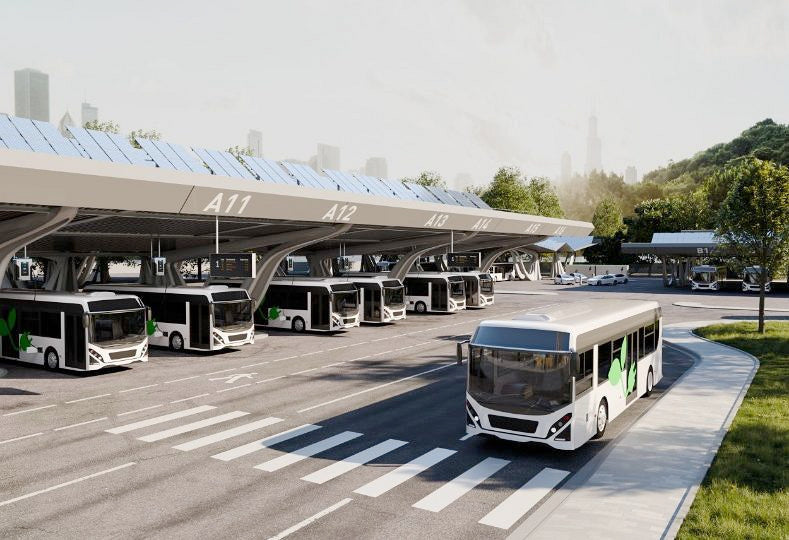
Siemens Electrifies Tuscany's Public Transport
Siemens eMobility is the guarantor of the far-reaching revolution that public transport in Tuscany, Italy, has undertaken via a very important partnership with Autolinee Toscane. Equipping bus depots in Florence, Prato, and Lucca with state-of-the-art charging infrastructure paves the way for more environmentally friendly and sustainable public transportation within the region.
A Comprehensive Vision for the Future
The ambitious undertaking includes far more than just the installation of 73 high-powered SICHARGE UC charging points: it includes medium and low-voltage electrical distribution systems by Siemens, complemented with smart IoT-enabled switches that ensure a steady and efficient energy supply while collecting valuable data to help improve the performance of the system. By thinking holistically, Siemens is fostering a truly interconnected and sustainable infrastructure.
Optimizing Charging with DepotFinity
It aims at turning charging operations intelligent and efficient, so Siemens launched the state-of-the-art software platform called DepotFinity. Technology will allow Autolinee Toscane to have a set of optimization possibilities in every phase of the charging process with the Smart Charging Logic. With Smart Charging Logic, DepotFinity automatically and dynamically adjusts charging schedules according to real-time grid conditions and specific demands of a fleet of buses while ensuring optimized battery performance thanks to preconditioning, ready for their next journey. But that's not all—the DepotFinity platform creates a wealth of valuable data on energy consumption, charging behavior, and mileage to help make informed, data-driven decisions to further optimize operations.
Revolutionizing Logistics in Italy
But Siemens' ambition doesn't stop with public transport. With IPLANET, it's redrawing the logistics landscape across Italy, converting 120 logistics sites into power-efficient logistic nodes. The pioneering project boasts hundreds of high-powered charging points for e-trucks and a variety of other state-of-the-art features. These range from fully integrated point-of-sale systems that will seamlessly facilitate a broad, user-friendly set of payment options to integrate renewable energy sources—solar and wind—directly into charging. Siemens creates the mobility hubs with solutions on specialized charging solutions, energy storage systems, and photovoltaic roof installations to assure logistics also turn green.
Siemens: At the Heart of Electric Mobility-Global
Success for Siemens in Italy is only one chapter in this German manufacturer's journey to become a leading company in electric mobility worldwide. With over 100,000 charging points installed worldwide and more than 800 projects completed in over 60 countries, Siemens offers unmatched experience and innovation in the field of electric vehicle technology. This reflects their global reach, the result of continuous commitment toward greener, efficient transportation.
Paving the Way for a Greener Future
These projects demonstrate Siemens eMobility's commitment to a more sustainable transportation system. Combining innovative technology, strong partnerships, and a deep understanding of customer needs, Siemens is driving the path toward a cleaner, greener, and more efficient future. Thus, they are not only electrifying Tuscany but also helping shape the face of transportation tomorrow.


