

pH Measurement and Electrode Maintenance in Industrial Processes
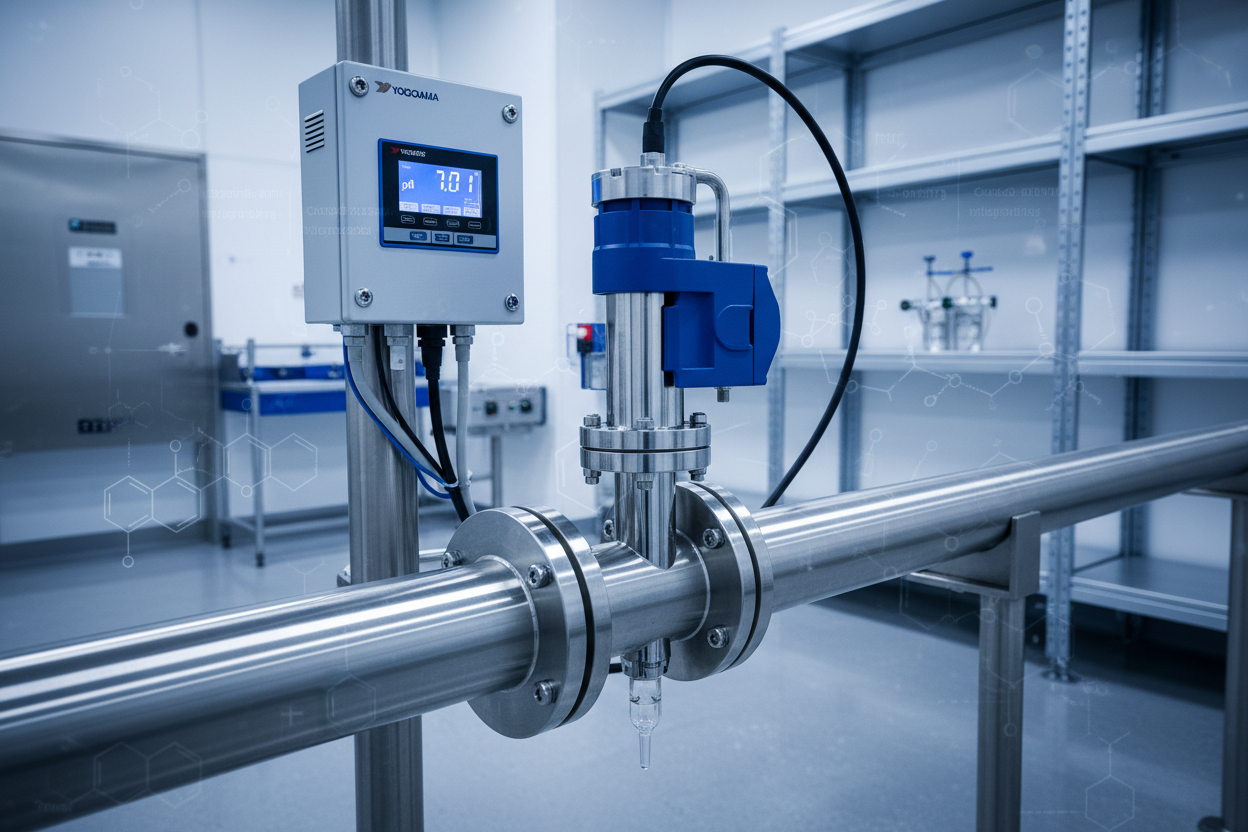
A practical guide to pH sensor selection, calibration buffers, electrode aging, and systematic fault diagnosis for process engineers and instrument technicians
Fundamentals of Industrial pH Measurement
pH measures the hydrogen ion activity in an aqueous solution on a scale from 0 to 14. A pH of 7 is neutral. Values below 7 are acidic. Values above 7 are alkaline. The measurement is logarithmic — each unit change represents a tenfold change in hydrogen ion concentration.
The standard industrial pH sensor uses a glass electrode that generates a millivolt potential proportional to pH. The Nernst equation describes this relationship: at 25°C, the electrode generates approximately 59.16 mV per pH unit. This value changes with temperature, making temperature compensation essential for accurate measurements.
Most industrial installations use a combination electrode that integrates both the measuring glass electrode and the reference electrode in a single housing. The reference electrode provides a stable potential against which the measuring electrode signal is compared. The reference junction — where the internal reference electrolyte contacts the process fluid — is the most critical and most fragile part of the assembly.
An alternative technology, the ISFET (Ion-Sensitive Field-Effect Transistor) pH sensor, replaces the glass membrane with a semiconductor gate. ISFET sensors are more robust than glass electrodes in high-pressure or high-vibration applications. They also respond faster to pH changes. However, they require more complex signal conditioning electronics and are significantly more expensive.
Sensor Selection Criteria for Process Applications
Selecting the wrong pH sensor for the process medium is a leading cause of short electrode lifespan and measurement errors. Engineers must evaluate five key parameters.
Temperature and Pressure Range — Standard glass electrodes operate reliably from 0°C to 100°C at pressures up to 6 bar. High-temperature processes above 130°C require special high-temperature glass formulations with reinforced reference junctions. Always confirm the sensor's process conditions envelope before procurement.
Reference Junction Type — The ceramic junction is the most common type and suits general water treatment. The open junction or flowing junction provides better resistance to junction plugging in slurries or colloidal solutions. A clogged reference junction is the single most common cause of pH reading drift or measurement error in industrial processes.
Glass Membrane Type — Standard pH glass works from pH 0 to 12. High-alkali glass formulations resist sodium error in strong alkaline solutions above pH 12. Low-impedance glass types suit high-purity water measurements where standard glass generates noisy signals due to ultra-low conductivity.
Process Fitting — Retractable sensor assemblies allow electrode removal and calibration without process shutdown. These assemblies are standard practice in continuous chemical or food processes. Fixed immersion fittings suit batch reactors where process downtime is scheduled.
Electrode Body Material — Epoxy bodies are economical but degrade in strong solvents. Titanium or PEEK bodies handle highly aggressive chemical environments including concentrated acids and oxidizing agents.
Yokogawa's FLXA202 dual-input liquid analyzer supports pH, ORP, conductivity, and dissolved oxygen measurements from a single platform. The instrument communicates over HART or PROFIBUS PA, allowing direct integration with ABB System 800xA DCS or other major distributed control systems.
Calibration Procedure and Buffer Standards
pH electrodes require regular two-point calibration to maintain measurement accuracy. The calibration establishes the electrode's slope and offset relative to known reference buffers.
Step 1: Buffer Selection — Use NIST-traceable buffer solutions that bracket the expected process pH range. A common calibration set uses pH 4.00 and pH 7.00 buffers for acidic processes, or pH 7.00 and pH 10.00 buffers for alkaline processes. Never use contaminated or expired buffer solutions. Discard buffers that have been exposed to air for more than four hours in open containers.
Step 2: Temperature Equalization — Allow the electrode and buffer solutions to reach the same temperature before calibration. A 5°C temperature difference between the electrode and buffer introduces a calibration error of up to 0.3 pH units due to the Nernst equation temperature coefficient. Most modern pH transmitters provide automatic temperature compensation (ATC) using a built-in Pt1000 RTD in the electrode body.
Step 3: First-Point Calibration — Rinse the electrode with deionized water, then immerse in the first buffer. Wait for the signal to stabilize — typically 30 to 60 seconds. Confirm the transmitter display reads within ±0.05 pH of the buffer nominal value before accepting the calibration point.
Step 4: Second-Point Calibration — Rinse the electrode again, then immerse in the second buffer. The transmitter calculates the electrode slope from the two-point data. An acceptable slope is 95–105% of the theoretical Nernst slope (56–62 mV/pH at 25°C). A slope below 90% indicates electrode aging or contamination. Replace the electrode if the slope cannot be recovered by cleaning.
Step 5: Record and Document — Log the calibration date, buffer lot numbers, measured slope percentage, and the technician's name in the loop calibration record. This documentation supports quality audits and regulatory compliance in pharmaceutical and food manufacturing environments.
Electrode Maintenance and Common Failure Modes
Proactive maintenance extends electrode life from a few weeks to six months or more. The maintenance interval depends on the process medium aggressiveness and the measurement criticality.
Daily Checks — Verify that the pH reading tracks expected process changes. A reading that is frozen or drifts extremely slowly suggests a plugged reference junction. Compare the reading against a portable calibrated pH meter as a cross-check when deviations are suspected.
Weekly Cleaning — Rinse the electrode with deionized water. For scaling processes, soak in 5% dilute HCl solution for 10 minutes to dissolve calcium carbonate or metal hydroxide deposits on the glass membrane. For protein fouling in food or biological processes, soak in a 0.1 M sodium hydroxide solution followed by a pepsin-HCl solution wash. Never use abrasive materials on the glass membrane.
Reference Junction Regeneration — For refillable reference electrodes, periodically refill the reference electrolyte (typically 3 M KCl solution). Low electrolyte level increases reference impedance and causes noisy readings. Some designs allow the reference junction to be reamed with a fine wire to restore flow.
Common Failure Modes:
- Cracked glass membrane — caused by thermal shock, mechanical impact, or fluoride exposure. The symptom is erratic readings or failure to reach stable calibration points. A cracked electrode cannot be repaired; replace immediately.
- Dehydrated glass membrane — caused by storage without protective cap or immersion in non-aqueous solutions. Rehydrate by soaking in pH 4 buffer for 24 hours. If rehydration does not restore slope above 90%, replace the electrode.
- Reference junction plugging — the most common failure in process environments. Symptoms include slow response, large calibration offset, and instability. For ceramic junctions, replace the electrode or junction plug. For open junctions, increase the reference electrolyte flow rate.
Honeywell's Analytical Instruments division supplies the Solu Comp II series of pH analyzers, widely used in water and wastewater treatment. The Solu Comp II provides diagnostic codes for high-impedance electrode failures, reference electrode failures, and calibration slope out-of-range conditions, helping technicians identify faults without removing the sensor from service.
Conclusion and Action Advice
pH measurement reliability depends less on sensor sophistication and more on disciplined maintenance and calibration practice. Select the electrode reference junction type to match the process medium — ceramic for clean water, open or flowing junction for slurries. Calibrate using NIST-traceable buffers that bracket the process operating range. Record electrode slope at every calibration to build a trend record of electrode aging. When slope drops below 90%, schedule replacement before the measurement becomes unreliable in production. Implement a retractable sensor assembly wherever the process must run continuously without pH loop interruption. A well-maintained pH loop with a six-month calibration program costs far less than a batch rejection or effluent compliance violation caused by drifting pH control.


