

Installing and Using Modern Industrial Joystick Controls
Introduction to Industrial Joystick Controls
Industrial joystick controls are vital for managing equipment in heavy industries, including cranes, material handling systems, and warehouse automation. These devices offer precise control over machinery movement, improving efficiency and safety. In this guide, we’ll explore how modern industrial joysticks are used and what to consider when selecting them.
What is an Industrial Joystick?
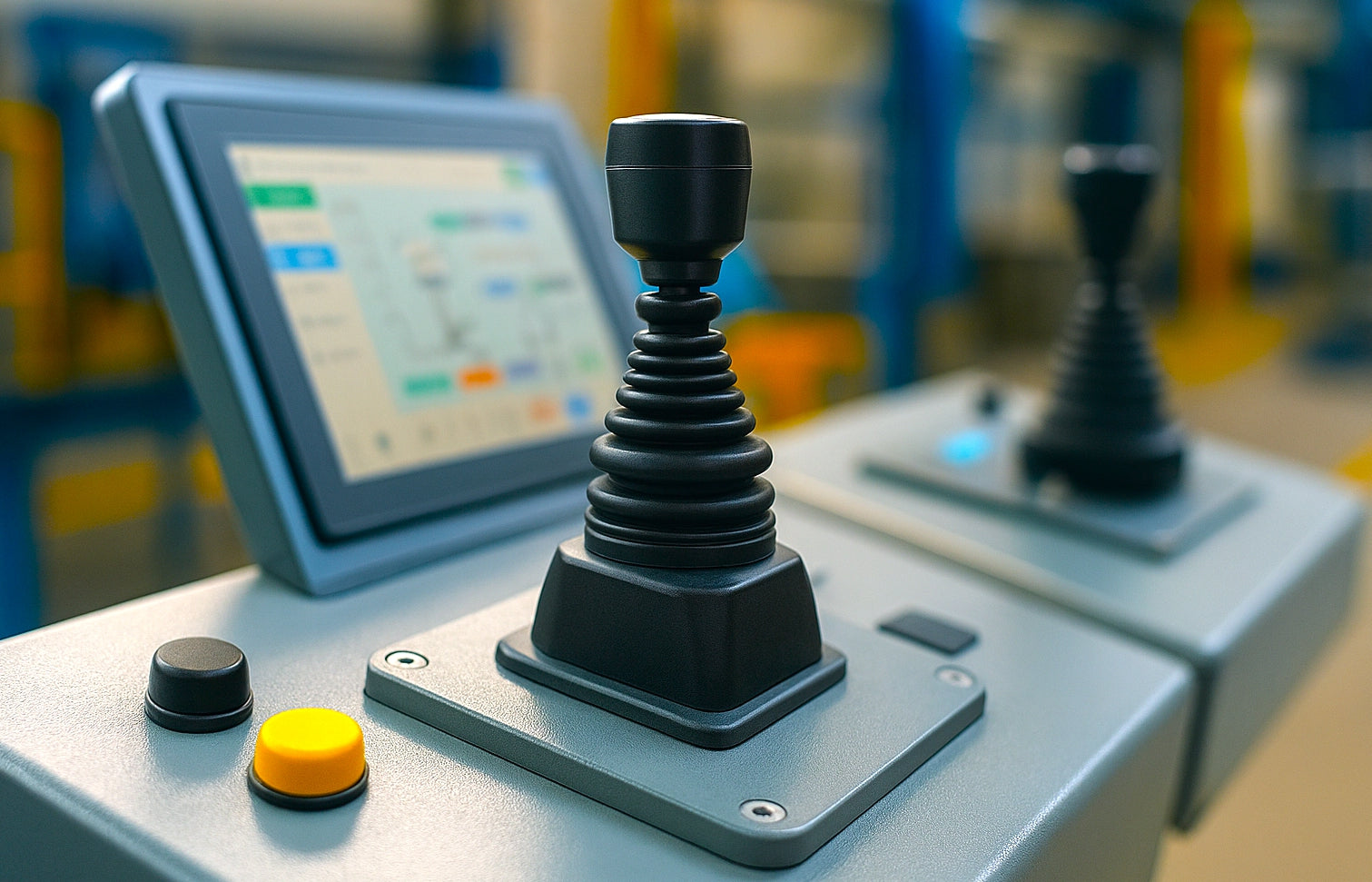
An industrial joystick functions similarly to a car's gear lever, but instead of controlling speed, it manages the direction and movement of equipment. By shifting the joystick, operators can control the motion of machinery such as cranes. Joysticks provide an intuitive way to manage complex movements in rugged industrial environments.
Types of Industrial Joysticks
-
Digital Joystick: Offers discrete on/off signals for simple control tasks.
-
Analog Joystick: Provides a continuous range of movement for more precise control.
-
Hall Effect Joystick: Utilizes magnetic sensors for smoother and more reliable control.
-
Optical Joystick: Uses light-based technology for detecting movement, reducing mechanical wear.
Joysticks can also differ in how they are operated—whether by handgrip, thumb, or finger—and the number of axes they control (single or multi-axis).
How to Choose the Right Industrial Joystick for Your Application
When selecting a joystick, several factors must be considered:
-
Customizability: Modern joysticks often allow for added buttons or functionalities. If you anticipate future modifications, choose a joystick that can be customized.
-
Ruggedness: Depending on your operating environment (e.g., extreme temperatures, dust, or moisture), ensure the joystick is built to withstand harsh conditions.
-
Ergonomics: Choose the joystick based on how it will be operated—by hand, finger, or thumb. The grip should be comfortable and support prolonged use.
-
Electrical Integration: Verify that the joystick is compatible with your system’s control panel voltage. Modern joysticks may also include communication outputs like CANopen, Modbus RTU, or Ethernet for seamless integration.
-
Single or Multi-Axis Movement: Based on the type of movement required (e.g., horizontal or vertical), select the joystick that matches your needs.
-
Product Reliability: Inspect reviews and consult vendors regarding potential issues like wear, erratic movements, or calibration problems.
Maintaining and Troubleshooting Industrial Joysticks
While industrial joysticks are robust, they can face issues like mechanical wear, failure to respond, or calibration problems. Regular inspection and maintenance are key to ensuring longevity and performance. Always check the joystick for signs of wear and perform calibration checks to ensure smooth operation.
Conclusion
Modern industrial joysticks are essential for controlling heavy machinery and improving material handling operations. By understanding the different types of joysticks and choosing the right one for your application, you can enhance productivity and reduce operational risks in your facility.


