

AI-Driven Motion Control: Transforming Precision and Agility in Modern Factories
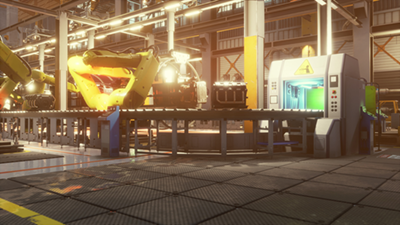
High-mix manufacturing and rapid product changeovers define the modern production landscape. To keep pace, industrial automation must move beyond rigid, legacy frameworks. While traditional motion systems excel in static environments, they often struggle with real-world variables like mechanical wear or temperature fluctuations. By integrating Artificial Intelligence (AI) with kinematics, manufacturers can create adaptive systems that learn and optimize in real-time. This evolution ensures that factory automation remains resilient, precise, and highly efficient.
Moving Beyond Deterministic Control Systems
Legacy control systems typically rely on fixed rules and pre-defined parameters. These systems perform well for repetitive tasks with low variability. However, they lack the flexibility to handle unexpected shifts in line speed or upstream production changes. In contrast, AI-enhanced motion control utilizes machine learning to build contextual awareness. This allows the system to adjust PLC outputs and motor profiles dynamically. Consequently, the plant maintains peak performance even as hardware components age or environmental conditions change.
How Machine Learning Optimizes Kinematics
AI does not replace classical control methods like PID loops or feed-forward profiles. Instead, it augments them with data-driven adaptation. Experts from industry leaders like Siemens note that AI continuously monitors friction, load, and tool wear. By analyzing these factors, the system optimizes motion profiles on the fly. This results in tighter path control and reduced energy consumption. Furthermore, real-time anomaly detection allows the system to identify potential failures before they cause an expensive line stoppage.
Practical Applications in Robotics and Healthcare
The impact of AI-enhanced motion extends across diverse sectors. In automotive plants, AI assists robots in welding and painting with superior precision. For pick-and-place operations, advanced factory automation handles complex shapes that would confuse traditional sensors. Beyond the factory floor, this technology stabilizes aircraft control systems and improves surgical robotics by reducing jitter. Therefore, AI-enhanced kinematics is becoming a cross-industry standard for any application requiring high-speed precision and safety.
Enhancing Safety Through Human-Robot Collaboration
Safety remains a top priority in any industrial automation deployment. AI enables a new generation of "cobots" that can safely work alongside human operators. These machines use AI vision to predict human movement and adjust their trajectory in real-time. If a worker reaches into the workspace, the robot may slow down or pause instantly. This proactive safety approach eliminates the need for rigid physical barriers, creating a more flexible and collaborative shop floor environment.
Measuring ROI and Overcoming Implementation Hurdles
Calculating the return on investment (ROI) for AI systems requires a comprehensive view of operational data. Standard metrics often overlook the "soft" savings from avoided downtime or reduced mechanical stress. However, success stories from major OEMs show throughput gains of over 30% through digital twin-trained controllers. To achieve these results, companies must prioritize high-fidelity sensor data and low-latency edge computing. A cross-functional team of IT and automation engineers is essential to align AI capabilities with real-world production goals.
Author’s Insight: The Strategic Shift to Edge Intelligence
In my analysis, the real "hero" of this technological shift is edge computing. Moving AI processing closer to the motion control hardware reduces latency to near-zero levels. This is critical because a millisecond delay in a high-speed assembly line can result in a collision. While the initial setup of an AI-driven system requires more data orchestration than a traditional PLC setup, the long-term reduction in "manual tuning" saves hundreds of engineering hours over the machine's lifecycle.


