

Trends Shaping the Future of Industrial Automation: What’s Next for Manufacturing?
The Expanding Industrial Automation Market: Key Insights
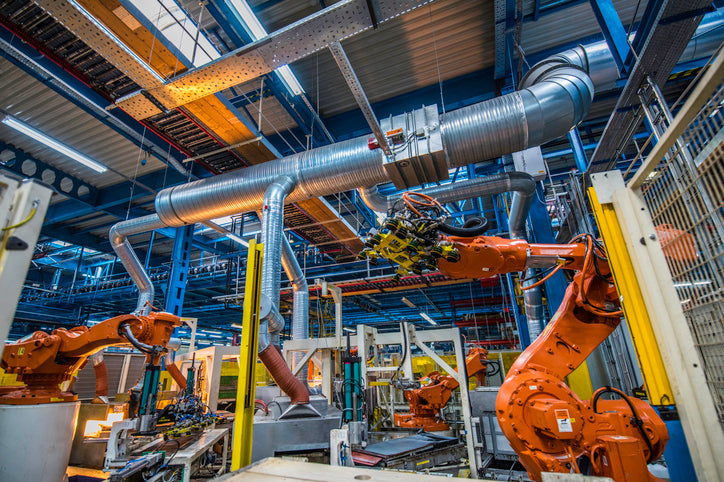
The global industrial automation market is expected to grow at a 10.8% CAGR, reaching $378.57 billion by 2030, up from $206.33 billion in 2024. This growth is largely driven by the adoption of IIoT, Industry 4.0 technologies, and automation solutions like collaborative robots (cobots), which are enabling businesses to achieve unprecedented levels of efficiency and scalability.
Manufacturers are increasingly turning to automation solutions to address labor shortages, rising costs, and the need for competitive advantage in an increasingly globalized market. As a result, automated systems are not just improving efficiency but also enabling companies to adapt quickly to market changes and optimize resource utilization.
IIoT and Industry 4.0: The Backbone of Smart Manufacturing
The Industrial Internet of Things (IIoT) is revolutionizing manufacturing by creating interconnected systems that allow for real-time data monitoring and predictive maintenance. By integrating sensors, devices, and machines into a cohesive network, IIoT facilitates data-driven decision-making. This is a cornerstone of Industry 4.0, where intelligent systems optimize production processes through data analytics and automation.
Technologies like OPC UA provide standardized communication protocols, ensuring devices from different manufacturers can seamlessly communicate. Smart sensors collect a variety of data—such as temperature, vibration, and energy consumption—that feeds into quality control systems, allowing real-time adjustments to production processes. As a result, manufacturers are able to reduce waste, improve product quality, and increase operational efficiency.
The Asia Pacific region is leading the adoption of IIoT, holding over 39% of the global market share in 2024. This growth is spurred by heavy infrastructure investments and government initiatives that prioritize digital transformation across multiple industries, including agriculture and energy.
AI and Machine Learning: Revolutionizing Predictive Maintenance
Artificial Intelligence (AI) and Machine Learning (ML) are playing an increasingly crucial role in industrial automation. By leveraging large datasets, AI-driven systems can predict equipment failures, optimize maintenance schedules, and continuously improve operational efficiency.
Machine learning algorithms analyze historical data from machines, identifying patterns and predicting potential issues before they arise. This approach significantly reduces downtime and improves maintenance scheduling, ensuring that machines are serviced only when necessary and during planned downtimes. As a result, manufacturers can minimize production disruptions, optimize resource allocation, and reduce maintenance costs.
AI-powered systems are also advancing production optimization by continuously adapting and learning from operational data, ultimately improving the efficiency and agility of manufacturing processes.
Edge Computing and Cloud Integration: A Powerful Combination
As manufacturing becomes more connected, edge computing has emerged as a critical technology for improving operational efficiency. Unlike traditional cloud computing, where data is sent to remote servers for processing, edge computing allows for data processing directly at the source of generation. This reduces bandwidth usage and improves response times for real-time applications.
When combined with cloud platforms, edge computing offers a hybrid solution that addresses both immediate operational needs and long-term strategic goals. Edge devices process data on-site, enabling immediate actions in response to changing conditions, while cloud platforms provide scalable storage and advanced analytics capabilities for strategic planning.
This integrated approach is particularly valuable for small and medium-sized manufacturers who can leverage cost-effective, local data processing capabilities while accessing the cloud for complex analytics and long-term optimization.
Collaborative Robots (Cobots): Expanding Access to Automation
Collaborative robots (cobots) are significantly changing the accessibility of automation for smaller manufacturing businesses. Unlike traditional industrial robots, cobots are designed to safely work alongside human operators without the need for complex safety measures or barriers. This makes automation more accessible to small and medium-sized manufacturers, particularly those with fewer than 100 employees, who previously could not justify the high costs of traditional robots.
Cobots can perform tasks such as pick-and-place, assembly, and packaging with high precision and consistency, allowing human workers to focus on higher-value tasks. As cobots continue to evolve, their ability to work alongside human workers will redefine flexibility and efficiency in manufacturing environments.
Additionally, autonomous mobile robots (AMRs) are transforming material transport within factories, reducing the need for fixed conveyors and enhancing operational flexibility.
5G: Transforming Communication in Industrial Automation
The deployment of 5G technology is revolutionizing industrial automation by enabling high-speed, low-latency communication between devices. With download speeds of 1 gigabyte per second, 5G supports the massive data flows required for advanced automation systems while reducing latency to near-zero levels. This makes real-time communication between devices possible, even in remote or rural locations.
5G also enables precision farming, autonomous vehicles, and GPS-enabled machinery, transforming industries such as agriculture and logistics. The enhanced signal reliability offered by 5G networks ensures that mission-critical devices can function seamlessly, even in challenging environments.
Cybersecurity and Data Protection: Securing the Connected Factory
As industrial systems become more interconnected, the risk of cybersecurity threats grows. With the rise of IIoT and Industry 4.0, manufacturing environments are more exposed to external attacks, making cybersecurity a top priority. Companies must implement proactive security measures to protect sensitive data and ensure the integrity of their operations.
Emerging vulnerabilities, such as GPS signal jamming and tampering, pose new threats to connected systems, from automated vehicles to precision manufacturing equipment. Traditional cybersecurity methods may not be sufficient to address these challenges, so manufacturers must adopt advanced solutions that monitor network traffic, detect anomalies, and safeguard against attacks.
Digital Twins and BIM: Optimizing Facility Operations
Digital twins and Building Information Modeling (BIM) are transforming how manufacturers design, maintain, and optimize their facilities. Digital twins create real-time, virtual replicas of physical assets, enabling continuous monitoring and predictive maintenance. These virtual models help companies track equipment performance, identify potential failures, and optimize operations before issues arise.
BIM plays a vital role in facility design by helping manufacturers visualize and plan layouts before construction begins. This capability ensures that production facilities are designed to optimize workflows and integrate automation systems efficiently, reducing costs and improving long-term operational performance.
Conclusion: The Future of Industrial Automation
The convergence of IIoT, AI, edge computing, and other advanced technologies is driving the future of industrial automation. Manufacturers are no longer just automating processes—they are creating interconnected, intelligent systems that improve efficiency, enhance decision-making, and optimize resource utilization.
As these technologies continue to evolve, businesses must adapt their strategies to incorporate the latest innovations. By embracing collaborative robots, AI-powered analytics, and 5G connectivity, manufacturers can stay competitive in an increasingly complex and fast-paced global marketplace.


