

ABB Launches SaaS Energy Management to Revolutionize Industrial Process Control
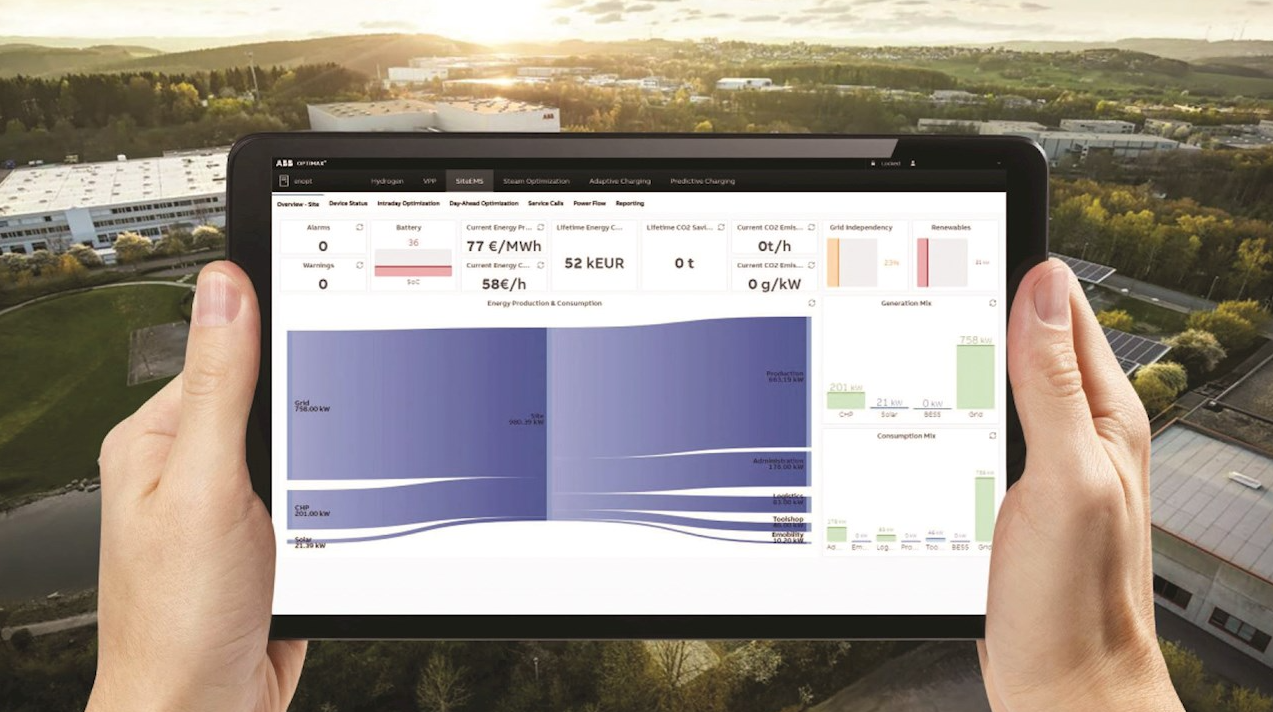
ABB has officially expanded its digital portfolio by introducing a Software-as-a-Service (SaaS) delivery model for its energy optimization suite. The release of ABB Ability™ OPTIMAX® 7.0 and Advanced Process Control (APC) 7.0 marks a significant shift in how heavy industry manages power. These tools provide operators with the agility needed to handle volatile energy markets while maintaining peak production performance.
Flexible Deployment Strategies for Modern Control Systems
The new SaaS model allows companies to outsource the heavy lifting of software maintenance to ABB. Therefore, plant managers no longer need to worry about local installations or manual security patches. Operators can now deploy these solutions via the cloud, at the edge, or through a hybrid infrastructure. This flexibility ensures that industrial automation remains accessible even for facilities with limited on-site IT resources.
Enhancing Performance with AI-Driven Forecasting and APC
Version 7.0 of the APC software significantly strengthens real-time, closed-loop control capabilities. Moreover, the integrated AI now predicts load demands and energy price fluctuations with high precision. These forecasts allow factories to adjust their consumption based on market trends. Consequently, users can improve grid compliance while lowering the total cost of energy-intensive production cycles.
Utilizing Kubernetes for Resilient Factory Automation
ABB has rebuilt OPTIMAX and APC on a Kubernetes foundation to ensure high availability and robust security. This containerized approach automates the scaling and management of applications across the enterprise. As a result, the software integrates securely with existing DCS and PLC architectures. This ensures continuous optimization without risking the fundamental safety or reliability of the plant floor.
Author Insight: The Strategic Value of Energy-Aware Automation
In my professional estimation, the convergence of energy management and process control is the next frontier for industrial automation. Traditionally, power monitoring and process control operated in silos. However, by merging these data streams, ABB allows the process to "follow" the energy price. This "energy-aware" automation is a critical step toward autonomous operations. It transforms energy from a fixed overhead into a dynamic variable for competitive advantage.
Driving Efficiency Toward Autonomous Operations
Gino Hernandez of ABB’s Energy Industries division noted that these upgrades lead the way toward fully autonomous operations. By using a shared digital environment, OPTIMAX and APC coordinate energy and process data simultaneously. This unified interface reduces human error and simplifies complex decision-making. Ultimately, the goal is a self-optimizing plant that responds instantly to both physical and economic changes.


