

Gas Detector Technologies Explained: Choosing the Right Sensor for Safety and Accuracy
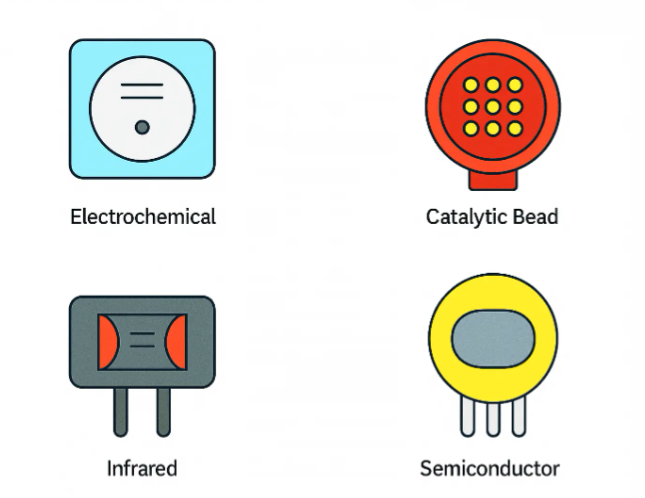
🔍 Understanding Sensor Technologies in Gas Detectors
By an Industrial Automation Engineer – plcdcspro.com
💡 Why Gas Detection Technology Matters
Gas leaks are a real danger in both industrial and domestic settings.
Choosing the right sensor technology ensures safety, accuracy, and long-term cost savings. Each type of sensor is designed for specific gas types. Using the wrong sensor not only wastes money—it puts lives at risk.
At plcdcspro.com, we specialize in automation solutions:
-
PLC modules
-
Industrial cards
-
Cables & connectors
-
Probes & sensors
-
Rich inventory, fast delivery
We help you select the right part, the first time.
🔥 Catalytic Bead Sensors — Reliable for Combustibles
This traditional method is perfect for flammable gases like methane and propane.
How it works:
-
Two beads: one active (coated) and one passive
-
Gas reacts with the active bead → Heat is generated
-
Temperature difference creates a voltage signal
-
More gas = more heat = higher signal
✅ Best used in environments with sufficient oxygen
❌ Not ideal in oxygen-deficient zones
🌈 Infrared (IR) Sensors — No Combustion Needed
Infrared sensors use light absorption, not chemical reaction.
How it works:
-
IR source sends light across a gas path
-
Gas absorbs light → Detector receives less
-
Less light = more gas
This method is great for:
-
Hydrocarbons
-
Harsh environments
-
Places lacking oxygen
✅ Low maintenance
✅ Works in dirty or humid areas
☢️ Photo Ionization Detectors (PID) — Detect VOCs
PID technology detects toxic gases and volatile organic compounds (VOCs) like benzene and xylene.
How it works:
-
UV light ionizes gas molecules
-
Ions generate electric current
-
More current = more gas
✅ Extremely sensitive
✅ Fast response time
✅ Ideal for labs, refineries, and chemical plants
⚗️ Electrochemical Sensors — Best for Toxic Gases
Designed for detecting gases like CO, SO₂, and NH₃.
How it works:
-
Gas reacts with working electrode → electrons released
-
Counter electrode balances flow
-
Electric current indicates gas level
✅ Compact design
✅ Low power consumption
✅ Great for confined spaces or portable units
🧪 Semiconductor Sensors — Simple and Cost-Effective
Uses a chip material (like tin dioxide) to detect gas presence.
How it works:
-
In clean air, oxygen blocks current
-
Gas reacts with oxygen ions → current flows
-
More gas = more current
✅ Affordable and widely available
❌ Affected by temperature and humidity
Best for basic indoor detection or low-risk environments.
🔊 Ultrasonic Detectors — High-Tech Leak Detection
Perfect for open-area leak detection.
How it works:
-
Gas leaks create ultrasonic sound (too high for humans)
-
Detector picks up the sound
-
More leak = higher frequency noise
✅ Works even if gas is not yet concentrated
✅ Ideal for offshore platforms, storage areas, and pipelines
✅ Summary: Choose Based on Application
| Sensor Type | Best For | Notes |
|---|---|---|
| Catalytic Bead | Combustible Gases | Requires oxygen |
| Infrared (IR) | Hydrocarbons, Low-O2 Zones | Optical, low maintenance |
| Photo Ionization (PID) | VOCs, Toxic Gases | High sensitivity |
| Electrochemical | CO, SO₂, NH₃ | Compact, accurate |
| Semiconductor | Indoor, Low-risk Environments | Cost-effective |
| Ultrasonic | Leak Detection in Open Areas | No contact with gas needed |
🛠️ We Help You Choose the Right Sensor
At plcdcspro.com, we don’t just sell parts—we offer expert guidance.
📦 Huge inventory
⚡ Fast global delivery
🤝 1-on-1 technical support
Need help picking the right detector or sensor?
Contact us today or browse our inventory at plcdcspro.com


