

ACS and FANUC Join Forces to Streamline Industrial Facility and Robotics Integration
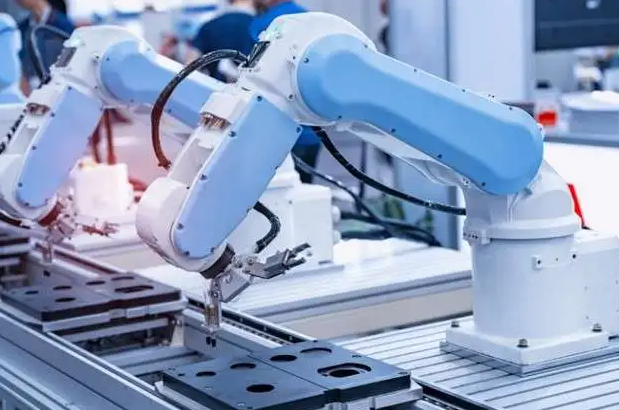
The landscape of industrial automation is shifting toward holistic project delivery. ACS recently announced its official certification as a FANUC systems integrator. This partnership marks a significant milestone for manufacturers seeking unified facility design and advanced factory automation. By merging structural engineering with robotic precision, ACS aims to eliminate the traditional silos that often delay complex deployments.
Single-Source Delivery Redefines Project Efficiency
Fragmented workflows frequently plague large-scale automation projects. Typically, one firm handles the facility construction while another manages the control systems and robotics. This separation often leads to costly coordination gaps. However, ACS now offers a single-source solution. They oversee everything from initial equipment specification to final programming and commissioning. Consequently, clients experience reduced project complexity and faster speeds to market.
Engineering Synergy Between Facilities and Robotics
A cross-disciplinary engineering approach is essential for modern manufacturing. ACS engineers analyze existing workflows to determine exactly where industrial robotics can replace manual, high-risk processes. Because the team understands both the physical building constraints and the technical requirements of PLC and DCS integration, they design spaces specifically optimized for robotic movement. This foresight ensures that the automation hardware fits perfectly within the facility's utility and spatial limits.
Investing in the Future of Robotics Training
Technical proficiency requires more than theoretical knowledge. To support this collaboration, ACS is expanding its dedicated robotics lab and internal training programs. By working directly with FANUC technologies, their engineers gain hands-on experience before arriving at a client site. Senior Automation Engineer Austin Levin notes that this "living with the technology" approach allows the team to troubleshoot potential issues in a controlled environment. As a result, the final implementation on the factory floor is much more reliable.
Specialized Solutions for Cleanroom Environments
Precision manufacturing requires specialized hardware. ACS has recently acquired a FANUC cleanroom robot to bolster its capabilities in the aerospace and automotive sectors. This investment complements their established expertise in cleanroom facility design. Integrating a cleanroom-rated robot requires strict adherence to particle control and airflow dynamics. Therefore, having a partner who understands both the environmental ISO standards and the robotic kinematics is a distinct competitive advantage for high-tech manufacturers.
Author Insight: The Shift Toward Unified Automation Strategies
From an industry perspective, this partnership reflects a growing trend: the "Productization" of the facility. Manufacturers no longer view the building as just a shell. Instead, they see it as a dynamic component of the production tool itself. In my view, the integration of FANUC's hardware reliability with ACS's structural expertise addresses the biggest pain point in industrial automation—the "hand-off" between contractors. By treating the robot and the room as a single system, companies can achieve higher uptime and better ROI.


