

The Strategic Value of Legacy Components in Industrial Automation
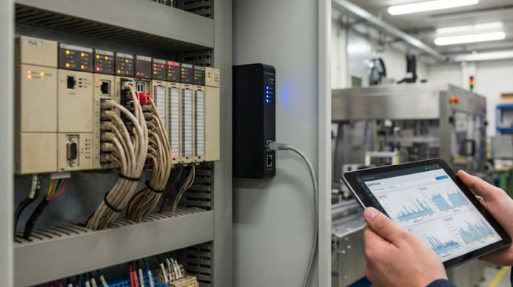
Legacy Automation and the Reality of Factory Operations
The pace of innovation contrasts sharply with daily plant operations.
In many facilities, industrial automation hardware installed decades ago still runs reliably.
These systems form the backbone of factory automation.
They control critical processes, ensure safety, and support consistent product quality.
Therefore, removing them without a clear business case introduces unnecessary risk.
Understanding the Obsolescence Dilemma in Control Systems
Manufacturers regularly issue End-of-Life notices for PLCs, HMIs, and I/O modules.
However, EOL status does not mean the equipment stops functioning.
This creates an obsolescence dilemma for plant managers.
They must choose between sourcing replacement legacy components or funding a full system upgrade.
In many cases, legacy hardware continues to meet performance and compliance requirements.
The True Cost of Replacing PLC and DCS Platforms
A full control system replacement involves more than new hardware.
Downtime, engineering labor, and retraining often exceed the cost of controllers.
Moreover, migrating legacy PLC logic to modern platforms introduces integration risk.
Older code may rely on undocumented behaviors or discontinued function blocks.
As a result, production interruptions can extend longer than planned.
From experience, selective component replacement often delivers better ROI than full modernization.
Reliability Advantages of Proven Automation Hardware
Reliability engineering favors equipment that has survived early failure phases.
Legacy PLCs that operate for years show predictable failure patterns.
In industries like water treatment and power generation, stability outweighs novelty.
Operators trust control systems that already survived real-world stress conditions.
Therefore, proven hardware often outperforms new revisions during early deployment.
Proactive Obsolescence Management in Factory Automation
Obsolescence only becomes dangerous when companies ignore planning.
Reactive maintenance leads to emergency procurement and costly downtime.
A proactive strategy audits installed automation assets regularly.
Maintenance teams identify high-risk components and secure spare parts early.
This approach stabilizes operations and improves budget predictability.
Independent Distributors and the Industrial Automation Secondary Market
OEM support often ends long before equipment stops working.
Independent distributors play a critical role in filling this support gap.
Reputable suppliers test, refurbish, and warranty discontinued automation parts.
They support brands like Siemens, Allen-Bradley, Schneider Electric, and ABB.
Therefore, they help manufacturers extend system life safely.
Supplier evaluation should focus on testing procedures, warranty terms, and return policies.
Integrating Legacy PLCs into Modern IIoT Architectures
Legacy automation does not block digital transformation.
Manufacturers increasingly retrofit existing systems instead of replacing them.
Edge gateways connect older PLCs through serial or fieldbus interfaces.
They convert data into modern protocols such as OPC UA or MQTT.
As a result, plants gain visibility without modifying core control logic.
This hybrid approach reduces risk while enabling analytics and predictive maintenance.
Sustainability Benefits of Extending Automation Lifecycles
Electronic waste continues to grow globally.
Replacing functional control systems accelerates this problem.
Extending the life of industrial automation supports circular economy goals.
It reduces resource consumption and lowers environmental impact.
In addition, it aligns sustainability objectives with cost control strategies.
Many companies now include lifecycle extension within corporate ESG programs.
Author Insight: Legacy Systems as Strategic Infrastructure
From a practical standpoint, legacy automation deserves respect.
These systems funded years of production efficiency and operational learning.
Modernization should focus on outcomes, not technology age.
If a control system delivers uptime, safety, and quality, replacement requires strong justification.
Smart manufacturers balance innovation with operational realism.


