

Siemens and Nvidia Partner to Create the Next Generation of Industrial AI Systems
A New Era of AI-Driven Industrial Automation
In 2023, when industrial AI first began to gain significant attention, Siemens executives were often asked about their future involvement in AI. At the time, the response was typically uncertain, with a promise to be actively engaged in AI's development. By CES 2026, the company unveiled a concrete vision for the future, showcasing its partnership with Nvidia to create cutting-edge AI solutions for industrial applications.
This partnership seeks to bridge the gap between the digital and physical worlds, enabling AI-driven innovation across every step of the industrial lifecycle. Together, Siemens and Nvidia aim to redefine how industrial systems are designed, built, and operated, enhancing product development, production efficiency, and real-time operational management.
Combining Expertise to Build the Industrial AI Operating System
Siemens and Nvidia's partnership brings together their respective strengths to create the world’s first industrial AI operating system. Roland Busch, President and CEO of Siemens AG, highlighted the significance of the collaboration, stating, "Together, we are building an industrial AI operating system—redefining how the physical world is designed, built, and run, to scale AI and create real-world impact."
By combining Nvidia’s leadership in accelerated computing with Siemens' extensive experience in industrial automation, software, and digital twins, the companies will enable faster product development, real-time production adaptation, and more resilient, sustainable manufacturing solutions.
AI-Powered Factories: A Blueprint for the Future of Manufacturing
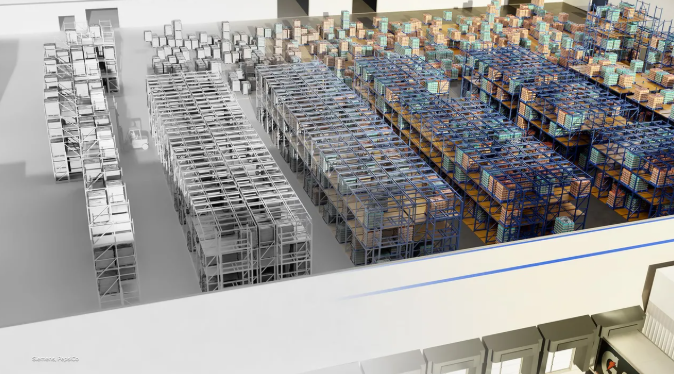
A key focus of this partnership is the creation of AI-powered, adaptive manufacturing sites. These facilities will leverage AI, simulation, and real-time operational software to drive continuous optimization and increase efficiency. The Siemens Electronics Factory in Erlangen, Germany, will serve as the first pilot, acting as a blueprint for future AI-accelerated factories globally.
Using a system dubbed the “AI Brain,” powered by both Siemens’ industrial software and Nvidia's Omniverse libraries, these factories will continually analyze their digital twins, test improvements virtually, and implement validated insights on the production floor. This real-time feedback loop will accelerate decision-making, reduce commissioning times, and mitigate risks, ultimately enhancing productivity.
Revolutionizing Simulation and Automation Across Industries
The collaboration aims to streamline industrial processes across a wide range of sectors, from semiconductor manufacturing to large-scale industrial operations. Siemens will integrate Nvidia’s GPU acceleration into its entire simulation portfolio, enhancing the speed and accuracy of simulations. Nvidia’s CUDA-X libraries and AI physics models will help create autonomous digital twins capable of real-time engineering design and self-optimizing production processes.
The companies' shared vision is to create AI systems that not only simulate complex industrial systems but also automate and optimize them in the real world. Generative AI and accelerated computing technologies will enable this transformation, moving digital twins from passive models into active participants in the production process.
Accelerating the Future of Semiconductor Design
One of the most exciting applications of the Siemens-Nvidia partnership is in the realm of semiconductor manufacturing. By applying AI to semiconductor design, the two companies aim to accelerate key workflows like verification, layout, and process optimization. This could lead to speed improvements of 2-10x in critical design phases, enabling faster time-to-market for new technologies.
Through the integration of Nvidia’s CUDA-X libraries, PhysicsNeMo, and GPU acceleration into Siemens’ electronic design automation (EDA) tools, the partnership will provide AI-assisted capabilities in layout guidance, debugging, and circuit optimization. These tools will improve productivity, enhance manufacturability, and shorten the design cycle, helping meet the growing demand for cutting-edge semiconductor technologies.
Creating the Next Generation of AI-Optimized Factories
In addition to advancing simulation and semiconductor design, Siemens and Nvidia will jointly develop a blueprint for the next generation of AI factories. These facilities will incorporate high-density computing, advanced power management, and cooling technologies, creating a sustainable foundation for AI-driven manufacturing.
By combining Nvidia’s AI platform with Siemens’ expertise in power infrastructure, automation, and grid integration, the two companies aim to optimize industrial-scale AI infrastructure worldwide. This collaboration will focus on improving energy efficiency, reducing operational costs, and increasing the resilience of manufacturing sites, all while supporting the rapid growth of AI technologies.
Shared Innovation to Accelerate Growth Across Industries
Siemens and Nvidia will not only implement their new technologies across their own systems but will also use their collaboration to improve each other’s portfolios. Nvidia will evaluate Siemens' offerings to optimize its own operations, while Siemens will leverage Nvidia’s AI technologies to accelerate its customer offerings. This process of mutual innovation will create concrete proof points of value for customers, enabling both companies to scale AI solutions across industries more efficiently.
The Road Ahead: Scaling AI Across Industries
As 2026 unfolds, the Siemens-Nvidia partnership will likely become a benchmark for AI-driven transformation in industrial automation. Companies like Foxconn, KION Group, HD Hyundai, and PepsiCo are already exploring the potential of these solutions, with the promise of faster innovation cycles and smarter, more efficient production systems.
By combining simulation, automation, and real-time AI, Siemens and Nvidia are positioning themselves as pioneers in industrial AI. Their partnership will have a lasting impact on how industries from manufacturing to semiconductor design leverage AI to improve productivity, reduce downtime, and create more sustainable production systems.
Conclusion: Embracing the Future of AI in Industrial Automation
The collaboration between Siemens and Nvidia marks a significant milestone in the evolution of industrial automation. By creating a fully integrated AI operating system, the two companies are transforming how industrial systems are designed, tested, and operated. The potential of AI to optimize production lines, accelerate product development, and improve real-time decision-making is immense.
As AI continues to drive the next industrial revolution, companies that embrace these technologies will be better positioned to stay competitive in a rapidly changing marketplace. The integration of AI, simulation, and automation represents not just the future of industrial automation but the key to unlocking greater efficiency, innovation, and sustainability.


