

Retrofitting the Future: How Digital Twins and ICT Automate Legacy Warehouses
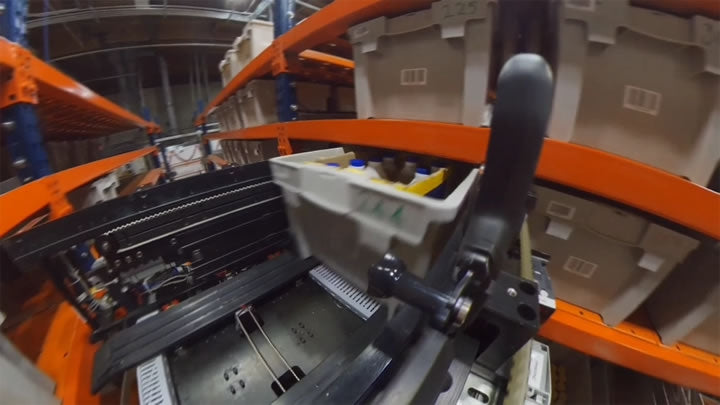
While brand-new "dark warehouses" dominate industry headlines, the real challenge lies in existing infrastructure. Thousands of operational distribution centers feature uneven floors and manual racking that resist standard factory automation. Cartesian Kinetics, a Rockwell Automation partner, recently tackled this hurdle. They combined digital twin software with advanced motion control to transform aging facilities into high-performance automated hubs. This approach proves that facilities do not need a total rebuild to leverage modern industrial automation.
Overcoming Infrastructure Barriers in Brownfield Facilities
Most automation-first buildings feature perfectly smooth floors and optimized pillar placements. However, over 25,000 older U.S. warehouses operate with constraints that hinder traditional robotics. These legacy sites often struggle to integrate control systems without halting daily production. Cartesian Kinetics recognized that operators cannot simply stop the clock to upgrade. Consequently, they developed a strategy that respects existing workflows while introducing sophisticated technology. This shift allows older sites to remain competitive against modern, purpose-built competitors.
Simulating Success with Emulate3D Digital Twin Software
Before installing a single motor, Cartesian Kinetics uses Emulate3D™ digital twin software to create a virtual mirror of the plant. This software allows engineers to simulate "what-if" scenarios, such as massive spikes in e-commerce orders. By testing the logic of the DCS (Distributed Control System) in a virtual space, they eliminate physical trial-and-error. As a result, customers reduce their financial risk and deployment timelines. This data-centric phase ensures the automation hardware performs correctly from day one.
Implementing Magnetic Levitation for Precise Motion Control
A standout feature of this solution is the move away from wheeled robots. Cartesian Kinetics utilizes Rockwell Automation’s Independent Cart Technology (ICT), which uses magnetic levitation. Traditional wheels struggle with uneven surfaces, but ICT navigates existing racks with extreme precision. Because the carts do not touch the ground in a traditional sense, they bypass floor imperfections. This technology essentially acts as a high-speed, intelligent conveyor system that adapts to the unique geometry of any building.
Enhancing Human Productivity Through Goods-to-Person Workflows
The ultimate goal of this industrial automation project is to empower the human workforce, not replace it. By using a "goods-to-person" model, the ICT system delivers multiple bins directly to stationary workers. This setup minimizes the time employees spend walking across vast warehouse floors. Consequently, worker fatigue decreases while picking speed increases. At one facility, this method boosted human output by 5x while simultaneously reducing error rates by 90%.
Author Insight: The Pragmatic Shift in Automation Strategy
In my professional view, the Cartesian Kinetics model represents a necessary "pragmatic turn" in the industry. For years, the narrative suggested that automation required a "blank slate" or a brand-new building. However, the capital expenditure for new construction is often prohibitive. By focusing on software-defined flexibility and magnetic motion, companies can now treat their existing square footage as a high-tech asset. I believe this "retrofit-first" mentality will be the dominant trend in logistics over the next decade.


