

Pratt’s Eagle Services Asia Boosts Engine MRO Efficiency Through Automation
TAGS: #aviation MRO automation #PLC and DCS systems #factory automation solutions #engine maintenance repair overhaul
Advanced Automation in Aviation MRO
Pratt’s Eagle Services Asia integrates advanced industrial automation to enhance engine maintenance, repair, and overhaul (MRO) operations.
The company applies modern PLC and DCS control systems to monitor workflow and optimize repair sequences.
As a result, precision and consistency improve across complex turbine engine processes.
Streamlined Engine Diagnostics and Control Systems
Automation enables faster fault detection and operational analysis in MRO facilities.
Control systems collect real-time data from test rigs and inspection equipment, providing actionable insights.
Moreover, predictive maintenance software identifies potential failures before they disrupt production.
This approach reduces turnaround time and minimizes unplanned downtime.
Factory Automation Drives Efficiency and Safety
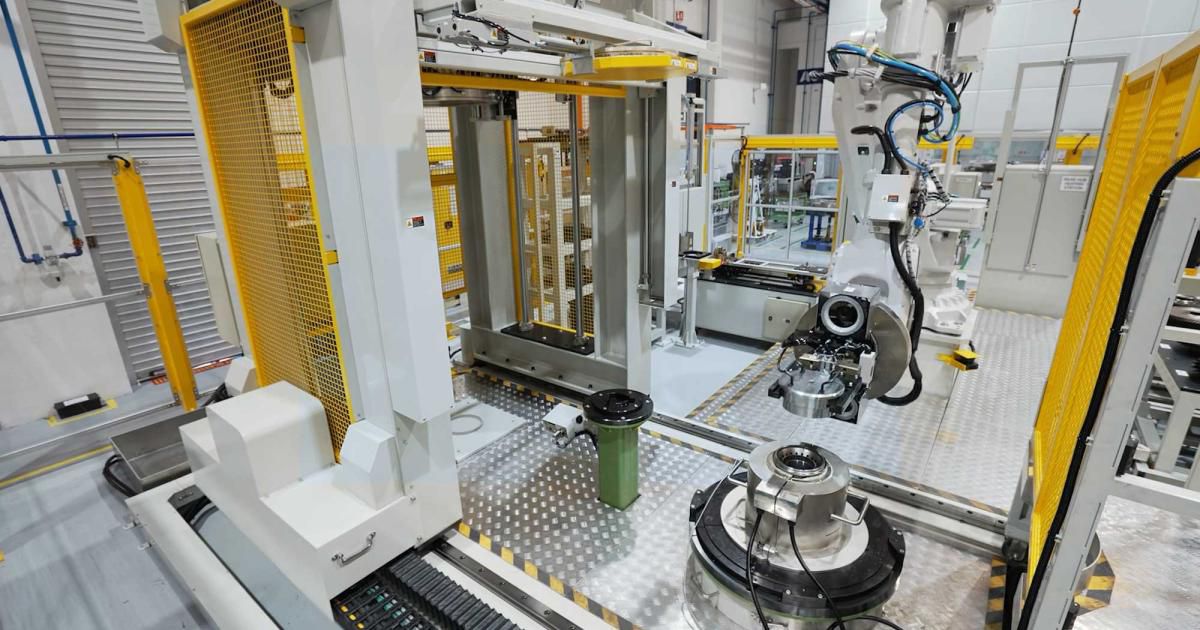
Eagle Services uses factory automation principles to integrate robotics, automated test stands, and material handling systems.
Automated workflows reduce manual intervention, ensuring consistent part handling and precise assembly.
In addition, safety improves by limiting human exposure to high-temperature or high-speed components.
Consequently, operational efficiency increases while adhering to stringent aviation quality standards.
Integration of Digital Systems and Data Analytics
The facility leverages digital twins and advanced analytics for engine performance simulations.
Real-time monitoring through industrial automation networks allows engineers to optimize repairs and calibrations.
Furthermore, data-driven insights support regulatory compliance and continuous process improvement.
Therefore, MRO operators can balance speed, accuracy, and reliability effectively.
Industry Implications and Author Insights
Pratt’s approach illustrates the growing convergence of aviation MRO with industrial automation technology.
Facilities adopting integrated control systems and predictive analytics achieve higher operational throughput.
Moreover, this strategy reduces human error, enhances data visibility, and supports long-term maintenance planning.
From an industry perspective, early adoption of automation in engine MRO sets a benchmark for other service providers.
Application Scenarios / Solution Use Cases
-
Turbine Engine Overhaul: Automated rigs manage precise component testing and assembly.
-
Predictive Maintenance: Data analytics identify wear patterns, enabling preemptive servicing.
-
Component Handling Automation: Robotics and conveyors reduce handling errors and improve safety.
-
Digital Twins for Simulation: Virtual models optimize repair sequences before physical implementation.


