

Next-Gen Intralogistics: AI and Digital Twins Redefine Smart Warehousing
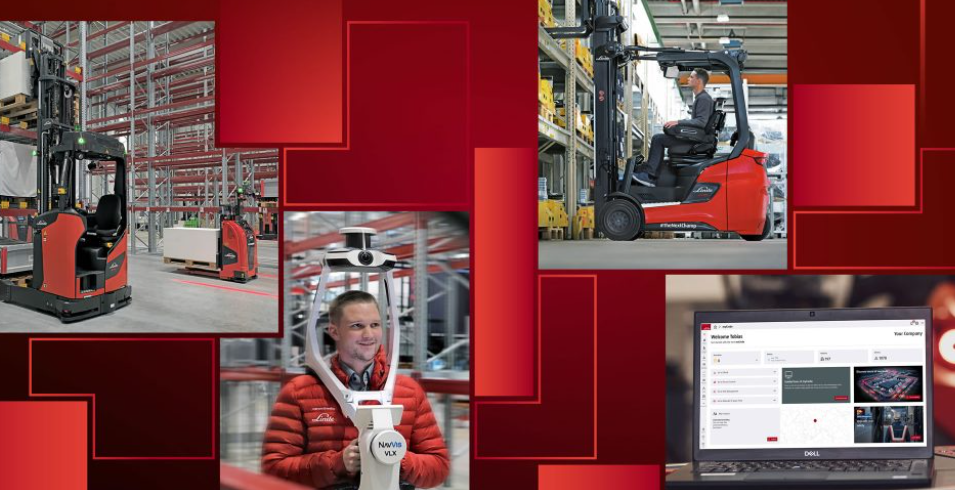
Modern industrial automation demands more than just hardware; it requires a seamless blend of mechanical power and digital intelligence. At LogiMAT 2026, Linde Material Handling (MH) will present its vision for the future of material flow under the motto "Composed around you." This showcase highlights how customized control systems and high-performance machinery create competitive advantages for global supply chains.
Strategic Automation for Complex Material Flows
Starting March 24 at the Stuttgart Exhibition Centre, Linde MH will demonstrate its mastery of automated warehouse processes. The company focuses on bridging the gap between standardized equipment and tailor-made solutions. For instance, the Linde I-MATIC line handles specialized industry needs, such as moving heavy beverage loads exceeding 3 tons. By integrating stationary applications like the S-MATIC cube shuttle, Linde provides a holistic approach to factory automation.
Artificial Intelligence and the myLinde Ecosystem
The myLinde customer platform serves as the central nervous system for modern fleet management. This cloud-based portal now features an AI-supported chat function, allowing managers to query fleet data using natural language. Consequently, operators can retrieve critical performance metrics without navigating complex menus. This integration of "Physical AI" ensures that even large corporate fleets remain scalable and easy to manage.
Enhancing Safety with Real-Time Locating Systems (RTLS+)
Safety remains a top priority in any industrial automation environment. Linde’s proprietary RTLS+ technology provides precise real-time localization for both manual and automated trucks. This system analyzes movement data to identify near-misses and high-impact shock events. Moreover, it assists companies in transitioning toward hybrid fleets, where human-operated forklifts and autonomous robots share the same workspace safely.
Precision Engineering in Manual Warehouse Technology
Despite the rise of robotics, manually operated trucks still perform vital roles in high-intensity environments. Linde MH will introduce the new Ri14, Ri16, and Ri18 reach trucks, specifically designed for narrow-aisle navigation. These models utilize integrated lithium-ion batteries and compact chassis designs to maximize maneuverability. Furthermore, the new Roadster electric forklift removes the A-pillar, significantly expanding the driver’s field of vision for safer operation.
Digital Twins and the Future of Project Planning
The future of intralogistics increasingly relies on virtual environments. By using NVIDIA Omniverse, Linde MH develops digital twins that simulate logistics processes in high fidelity. Portable scanners now create 3D warehouse maps in minutes, accelerating the planning phase for complex control systems. This digital-first approach allows managers to test fleet configurations in a risk-free virtual space before physical implementation.
Author Insight: The Shift Toward Hybrid Intelligence
The most significant takeaway from Linde's 2026 lineup is the "normalization" of AI in the warehouse. We are moving past the experimental phase where robots were isolated. Now, through RTLS+ and AI-driven platforms, the entire warehouse functions as a single, coordinated organism. In my view, the "Roadster" model’s focus on visibility proves that even in an automated world, human-centric design remains a critical safety redundant.


