

Essential PLC Selection Guide: 5 Critical Features for Industrial Automation Success
1. Choosing Between Embedded and Modular I/O Architecture
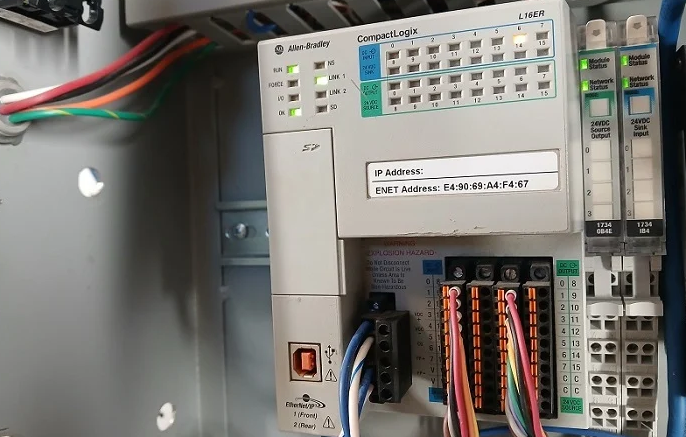
One of the first decisions involves the physical I/O (Input/Output) structure. Many entry-level controllers feature "fixed" or embedded I/O, where digital and analog terminals are integrated into the CPU housing. This design is often cost-effective for small-scale factory automation tasks.
However, you must consider future scalability. A fixed controller might save money today but force a full system replacement tomorrow if your process expands. Modular systems allow you to add discrete or specialty cards as needed. Moreover, always verify if the compact hardware requires a different, less capable software suite than the manufacturer’s flagship line.
2. Navigating Software Licensing and Total Cost of Ownership
The software environment is arguably the most significant factor in your daily workflow. Vendors like Siemens, Rockwell Automation, and Schneider Electric offer various licensing models. You may encounter one-time permanent licenses or annual subscriptions.
While permanent licenses seem attractive, confirm whether they include version upgrades. Subscription models often provide better access to the latest security patches and features. For learners, many brands offer free "Lite" versions. Nevertheless, these versions often restrict program size or communication capabilities, making them unsuitable for large control systems.
3. Selecting Programming Languages for Long-Term Maintenance
The IEC 61131-3 standard defines several programming languages, including Ladder Diagram (LD), Function Block Diagram (FBD), and Structured Text (ST). Your choice should reflect regional standards and the expertise of your maintenance team.
In North America, Ladder Logic remains the dominant language due to its similarity to electrical schematics. Conversely, European engineers frequently utilize Function Block Diagrams for complex process control. From an expert perspective, I recommend learning Structured Text for data handling and math-heavy tasks, as it aligns closely with modern high-level programming like C++ or Python.
4. Assessing Network Protocols and Physical Connectivity
In the era of Industry 4.0, connectivity is paramount. Most modern PLCs feature an RJ45 port, but the physical connector does not guarantee protocol compatibility. A standard Ethernet port might support EtherNet/IP, PROFINET, or Modbus TCP, depending on the firmware.
Before purchasing, map out your peripheral devices. If you utilize high-speed motion control, ensure the controller supports deterministic protocols like EtherCAT. Using mismatched protocols requires expensive protocol gateways, which introduce latency and complicate troubleshooting. Always verify the maximum number of simultaneous connections the CPU can handle.
5. Leveraging Web Server Access for Remote Diagnostics
Integrated web servers are transforming how technicians interact with hardware. This feature allows you to access PLC diagnostics via a standard web browser without installing proprietary software. You can monitor I/O status, view system logs, and sometimes adjust configuration parameters.
In my experience, a robust web server can replace a basic HMI (Human Machine Interface) for simple diagnostic tasks. This reduces hardware costs and simplifies field service. However, ensure the PLC includes cybersecurity features, such as HTTPS and user authentication, to protect your network from unauthorized access.


