

Balancing Efficiency and Consumption: The Dual Nature of Industrial AI
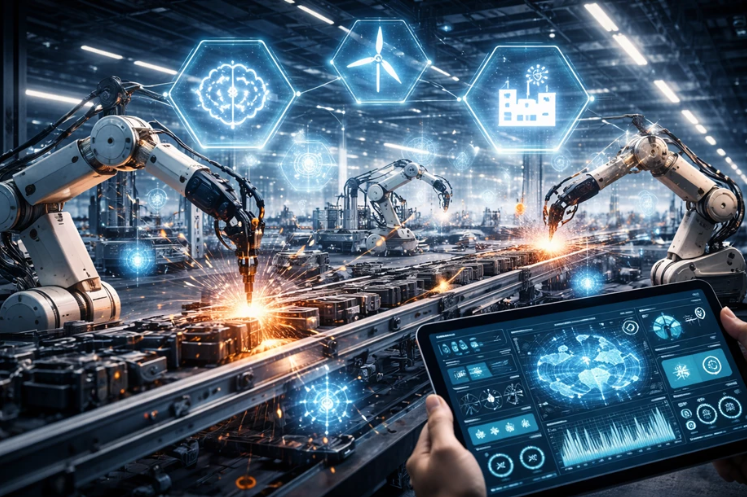
Modern industrial automation stands at a critical crossroads. While artificial intelligence promises to optimize factory automation, it simultaneously demands unprecedented levels of power. A recent study in Applied Sciences titled "Automation and Sustainability" highlights this complex relationship. It explores how Industry 4.0 and Industry 5.0 technologies influence global energy efficiency and industrial productivity. Understanding this balance is essential for manufacturers aiming for long-term sustainability.
Navigating the Energy Paradox in Smart Factories
Machine learning systems analyze massive datasets to boost productivity and reduce operational downtime. These tools allow control systems to anticipate mechanical failures before they disrupt production. Moreover, automated monitoring adjusts processes in real time to minimize material waste. However, these advanced capabilities require significant computational power. Data centers and cloud infrastructures consume vast amounts of electricity to process this industrial information. As a result, the energy saved on the factory floor might be offset by the energy used in the server room.
Transitioning from Red AI to Green AI Strategies
The industry currently distinguishes between two primary computational approaches. "Red AI" focuses purely on maximizing performance regardless of the carbon footprint. In contrast, "Green AI" prioritizes computational efficiency and environmental sustainability. For those managing a DCS (Distributed Control System), selecting energy-efficient algorithms is becoming as vital as hardware selection. Developers must focus on creating leaner AI architectures. This shift ensures that digital transformation supports, rather than undermines, corporate environmental goals.
Integrating Industry 4.0 Connectivity with Sustainable Infrastructure
Industry 4.0 relies on the seamless exchange of data between IoT devices and production networks. These technologies enable intelligent PLC (Programmable Logic Controller) operations that regulate energy usage dynamically. Nevertheless, the digital infrastructure required for real-time analytics expands the total energy footprint of a facility. To counter this, manufacturers should integrate renewable energy sources directly into their digital ecosystems. My perspective is that hardware efficiency alone is insufficient; we need smarter integration of green power at the edge.
Industry 5.0: Placing Humans at the Heart of Automation
The shift toward Industry 5.0 represents a move from pure connectivity to human-centric resilience. This paradigm combines AI's analytical strength with human creativity and ethical decision-making. Instead of full replacement, Industry 5.0 promotes collaboration through "cobots" and adaptive automation. Human oversight ensures that factory automation follows broader sustainability frameworks. This collaborative model prevents systems from optimizing for short-term output at the expense of long-term environmental health.
Utilizing Digital Twins and IoT for Circular Economics
Digital twins allow engineers to simulate entire production cycles in virtual environments. This capability enables the testing of energy optimization strategies without risking physical resources. Furthermore, IoT sensors provide the granular data necessary for a circular economy. By extending machinery lifespan through predictive maintenance, AI reduces industrial waste significantly. In my experience, utilizing a digital twin during the commissioning phase can reduce energy-related errors by up to 20%.
Addressing Technical Complexity and Cybersecurity Risks
Integrating AI, IoT, and robotics into a unified system introduces significant technical challenges. Specifically, the complexity of a modern DCS increases the attack surface for cyber threats. A security breach could lead to catastrophic operational failures and massive energy spikes. Therefore, robust cybersecurity is a fundamental component of sustainable automation. Organizations must adopt standardized metrics to measure the true environmental impact of their digital infrastructures accurately.
The Future Path Toward Industry 6.0
Looking ahead, we anticipate the emergence of Industry 6.0. This future generation will likely feature self-adaptive infrastructures that optimize resources across entire global supply chains. These networks will use "Edge AI" to process data locally, reducing the need for energy-heavy cloud transfers. By combining intelligent control systems with decentralized smart grids, factories can automatically sync production with renewable energy availability. This evolution marks the final transition from automated machines to autonomous, sustainable ecosystems.


