

Triconex 3664
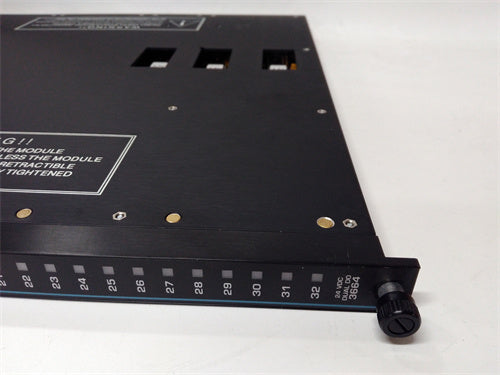 The functional parameters of the Triconex 3664 are as follows:
Input and Output Parameters:
Channels: Provides 8 or 16 channels.
Analog Inputs: Supports 4-20 mA, 0-10 V analog signal inputs.
Analog Outputs: Supports 4-20 mA, 0-10 V analog signal outputs.
Discrete Inputs and Outputs: Supports relay contact-based discrete inputs and outputs.
Power Supply and Operating Environment:
Input Voltage: 24V DC.
Operating Temperature: -40°C to 70°C.
Communication Protocols:
Supports Modbus TCP/IP and OPC UA communication protocols.
Physical Characteristics and Protection:
Design: Rugged and durable, capable of enduring harsh environmental conditions.
Protection Level: IP30 rated, with corrugated aluminum reinforced enclosure.
Mounting: Standard industrial 35mm DIN rail mounting.
Power Protection: DC1500V power isolation, reverse connection protection, dual power supply redundant input (DC9-36V).
Surge Protection: 4000V lightning protection, 1.5 A overcurrent, 600W surge protection.
Redundancy and Self-Diagnostics:
Redundancy Design: The module features internal redundancy designs such as 1oo2, 2oo3, ensuring that other channels can operate normally in case of a single channel failure.
Self-Diagnostics: The module can automatically diagnose its own faults and provide fault indications.
Certifications and Standards:
Compliant with SIL 3, IEC 61508, and other safety standards.
Indicators and Interfaces:
6 bicolor LED status indicators for indicating module status.
Data Interface: 9-pin Sub_D socket connector supporting the Profibus DP bus standard with a communication rate of up to 12MBit/s.
Application Areas:
Widely used in industries such as oil and gas, chemicals, power, metallurgy, and other industries requiring safety instrumented systems.


