

The Rise of Virtual PLCs: Transforming Modern Control Systems
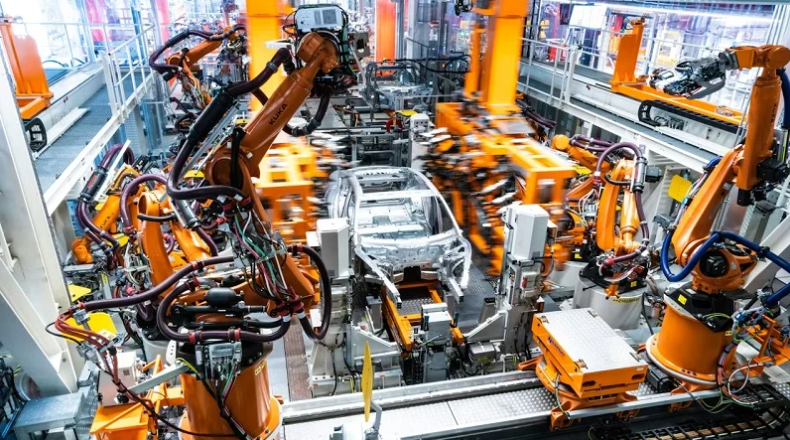
Virtual control systems are no longer just tools for offline simulation. Today, engineers use virtual PLCs (vPLCs) to manage real-world inputs, drive outputs, and execute complex motion control. Major industry players like Siemens have already validated this shift with the S7-1500V. Furthermore, Audi’s Edge Cloud 4 Production line proves that IT-based factory automation is ready for high-volume series production.
Understanding the vPLC Evolution
A traditional PLC resides in a control cabinet, using custom-designed, multicore processors for dedicated automation tasks. In contrast, a vPLC is a software-based controller installed on an industrial server or PC. This software leverages the massive processing power of modern high-end CPUs to execute logic. While physical hardware remains the backbone of many sites, the software-defined approach is gaining ground due to the rise of IIoT.
Breaking the Hardware Lock-In
One major driver for vPLCs is hardware "decoupling." Traditionally, proprietary hardware and software were inseparable. If you bought a specific brand, you were locked into their ecosystem. Virtual PLCs separate the control logic from the physical device. Therefore, you can install, clone, or migrate your program to any compatible computer. This flexibility prevents manufacturers from being tied to a single hardware vendor.
Scalability and Future-Proofing
Physical control systems often have fixed limits on memory and processing power. If a project outgrows the hardware, you must purchase and install a new unit. However, vPLCs offer a much easier upgrade path. You can expand memory on a server or spin up new PLC instances as factory demands increase. This makes upscaling a matter of software configuration rather than physical rewiring.
Integrating IT and OT Networking
Most modern field I/O devices use industrial automation protocols like PROFINET, EtherNet/IP, or Modbus TCP. Because these protocols run on standard Ethernet infrastructure, vPLCs integrate naturally into the existing IT network. Nevertheless, this requires close cooperation between IT and OT departments. Engineers must design robust VLAN topologies to ensure that machine traffic remains secure and deterministic.
Reliability and Ruggedness Concerns
Traditional PLCs are purpose-built for harsh environments, handling extreme heat, dust, and moisture. They are highly deterministic and designed for safety-critical tasks. Conversely, standard servers lack the ruggedized shells and redundant power features of an industrial controller. When choosing a vPLC, you must ensure the hosting hardware is located in a protected area or built to industrial standards to prevent catastrophic downtime.
Mitigating the Single Point of Failure
Concentrating all factory logic onto one server creates a significant risk. If that server fails, the entire production line stops. To counter this, engineers must implement fail-safes such as RAID storage, redundant servers, and Virtual Machines (VMs) for rapid recovery. While a distributed system of physical PLCs isolates failures, a centralized vPLC requires a more sophisticated disaster recovery strategy.


