

Five Manufacturing and Industrial Automation Trends to Watch in 2026
1. Tariff Uncertainty Drives Automation and Operational Resilience
Ongoing tariff volatility continues to disrupt global manufacturing operations.
U.S. manufacturing activity declined late in 2025 as companies faced higher material costs and weaker demand.
As a result, manufacturers increasingly rely on industrial automation systems to stabilize margins.
Many firms now prioritize PLC-based production lines, DCS-controlled processes, and digitalized supply chains to offset rising input costs.
From an operational perspective, automation reduces dependency on volatile labor and cross-border sourcing.
In my experience, plants with flexible control systems respond faster to tariff shocks than labor-intensive facilities.
Therefore, tariff uncertainty indirectly accelerates factory automation investments, especially in metals, automotive, and electronics manufacturing.
2. Manufacturing Investment Growth Fuels Smart Factory Expansion
Despite economic uncertainty, manufacturing investment continues to grow.
Government incentives, tax advantages, and rising demand for semiconductors support long-term capital spending.
Policies allowing full expensing of new equipment favor automation hardware, industrial robots, and advanced control systems.
Moreover, the data center boom increases demand for transformers, switchgear, and power management equipment.
Semiconductor manufacturing remains a major growth engine.
New fabrication plants rely heavily on high-availability DCS platforms, cleanroom automation, and predictive maintenance software.
In addition, merger and acquisition activity is rising.
Automation vendors and system integrators increasingly acquire niche software and AI companies to expand digital capabilities.
3. Workforce Transformation Supports Smart Manufacturing Adoption
Manufacturers face a persistent skills gap as experienced workers retire.
At the same time, advanced technologies require new technical competencies.
To address this challenge, companies invest in automation training programs focused on PLC programming, SCADA systems, and robotics integration.
Public funding and private partnerships with technical institutes support this transition.
In practice, I have observed that plants combining automation upgrades with workforce retraining achieve faster returns.
Workers transition from manual tasks to roles involving system monitoring, optimization, and troubleshooting.
Therefore, workforce transformation becomes a prerequisite for successful industrial automation deployment, not a secondary consideration.
4. AI and Digital Tools Accelerate Factory Automation
Artificial intelligence adoption accelerates across manufacturing operations.
Manufacturers deploy AI to address labor shortages, cost pressures, and supply chain disruptions.
Smart factories increasingly integrate AI-enabled control systems, machine vision, and data analytics platforms.
Many companies already use AI agents to optimize procurement, inventory, and production scheduling.
Agentic AI enhances traditional automation by enabling systems to make autonomous decisions.
When combined with PLCs and DCS architectures, AI improves throughput, quality, and asset utilization.
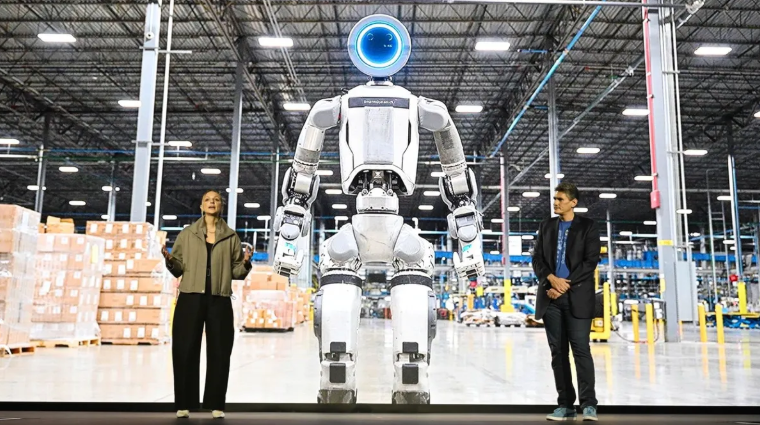
Physical AI, including autonomous robots, gains traction for material handling and inspection.
Early adopters report measurable productivity gains and improved workplace safety.
5. Chemical Regulation Shifts Influence Process Automation Design
Chemical regulation remains a moving target at both federal and state levels.
Regulatory changes directly impact process automation, safety systems, and compliance monitoring.
Manufacturers respond by upgrading process control systems to improve traceability and reporting accuracy.
Advanced sensors, real-time analytics, and automated documentation reduce compliance risk.
However, state-level chemical bans create regional complexity.
Facilities operating across multiple states increasingly standardize automation platforms to manage regulatory variation efficiently.
From an engineering standpoint, flexible DCS architectures offer long-term advantages under regulatory uncertainty.
Author’s Perspective: Automation as a Strategic Hedge
Looking ahead, industrial automation is no longer just a productivity tool.
It functions as a strategic hedge against tariffs, labor shortages, and regulatory complexity.
Manufacturers that delay automation risk falling behind more agile competitors.
Conversely, companies investing in scalable factory automation and digital control systems gain resilience and adaptability.
In 2026, automation strategy will increasingly influence corporate valuation and long-term competitiveness.


