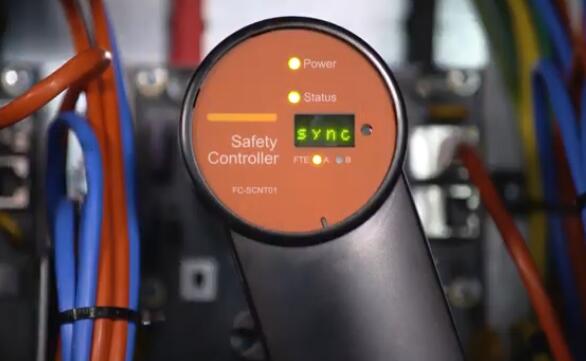
FC-SCNT01 is a Honeywell SC S300 safety controller

FC-SCNT01 is a Honeywell SC S300 safety controller

Safety Manager SC

Fully Redundant, TUV SIL 3 Certified
Simple Design - Easy to Assemble and Maintain
Redundant -S300 Modules
Safety Digital 10 (SDIO) Module
Safety Universal 10 (SUIO) Module
Easy to order and Install a Fully Certified System
Integrates with Experion-CDA or SCADA Protocol-Data Transfer to your DCS System

The Honeywell FC-SCNT01 input/Output module is a key component in Honeywell's security systems and is commonly used to connect and control a variety of security devices such as detectors, alarms and door locks. The input/output module acts as a bridge in the security system, allowing communication and data exchange between the controller and the field equipment.

Here are some possible overviews of the specific functions and features of the FC-SCNT01 module (please note that specific specifications and features may vary by product version and region) :

Input function: The FC-SCNT01 module can accept input signals from field devices, such as fire alarm signals of smoke detectors, and the status of doors and Windows. These input signals are processed and sent to the primary controller of the security system.
Output function: The module can receive the output instructions from the autonomous controller and convert these instructions into appropriate control signals to control the field equipment. For example, when the controller receives a fire alarm signal, it can send instructions through the FC-SCNT01 module to make the door lock open automatically or activate the evacuation alarm.
Communication interface: The FC-SCNT01 module usually uses a standard communication protocol to communicate with the main controller to ensure reliable transmission of data in the system.
Power supply and power isolation: Modules usually have power isolation to ensure that no damage will be caused to the system in the event of a power failure or anomaly.
Programmability: Some advanced versions of I/O modules may be programmable, allowing the user to configure the function and behavior of the module according to specific needs.
Status indicator: The module may be equipped with a status indicator to indicate the status of the input/output signal, the status of the power supply, and the possible fault status.
Environmental adaptability: FC-SCNT01 modules are typically designed to operate reliably in a variety of environmental conditions, including different temperature and humidity conditions.
Installation and maintenance: Modules should be easy to install and maintain, usually with standard terminals and easily identifiable labels.

We have many Honeywell modules in stock, click this link to see more

Show All
Blog posts
Show All
The Rise of the Smart Factory: Revolutionizing Industrial Automation in 2026
plcdcspro

The Rise of the Smart Factory: Revolutionizing Industrial Automation in 2026

  • Automotive Industry: Using AI-driven predictive maintenance and quality control systems, automotive manufacturers can achieve up to 12% reductions in unplanned downtime and ensure 100% defect-free products.

  • Aerospace: By integrating additive manufacturing with in-process quality inspection, companies can reduce production cycle times by 68% while ensuring high-quality, reliable aerospace components.

Japan's Compressed Air Filter and Dryer Market: Advancements and Key Players
plcdcspro

Japan's Compressed Air Filter and Dryer Market: Advancements and Key Players

In recent years, Japan has seen significant growth in its compressed air filter and dryer market, driven by the increasing demand for clean, dry air in various industrial operations. As automation continues to expand, industries require highly reliable air systems that meet strict air quality standards. From food packaging to metal fabrication, compressed air systems are playing a crucial role in maintaining operational efficiency and product quality. This article explores key developments in the market and highlights leading companies making strides in air filtration and drying technology.

Advancing Industrial Automation with Reflective Automation and Situated Intelligence
plcdcspro

Advancing Industrial Automation with Reflective Automation and Situated Intelligence

Industrial automation has historically been centered on the principle of control—ensuring efficiency by regulating systems within predetermined boundaries. However, with the rise of digitalization and connectivity, the next phase of industrial evolution emphasizes not just control, but awareness and interpretation. The focus is now on creating systems that not only observe their environments but understand them. This shift, from functional automation to reflective automation and situated intelligence, marks a significant transformation in how factories operate.