

Yokogawa Enhances OpreX Field Instruments with New EJX S Pressure Transmitters
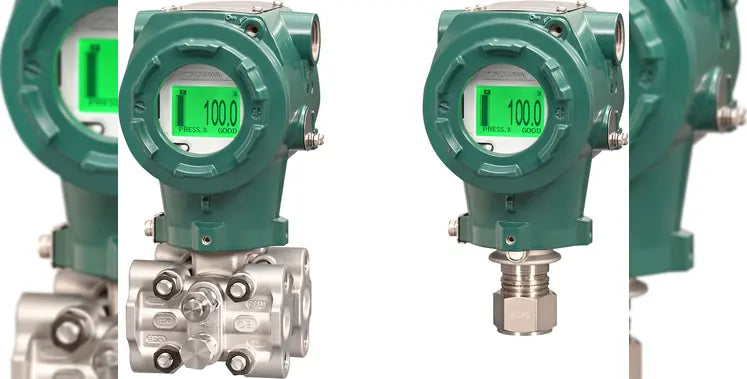
Yokogawa Electric Corporation recently unveiled the OpreX Pressure Transmitter EJX S Series. This lineup succeeds the established EJX A series. It represents a significant step forward for the OpreX field instruments family. These devices utilize advanced silicon resonant sensor technology to provide high-precision measurements. Manufacturers can now achieve more stable plant operations through improved durability and long-term sensor reliability.
Precision Performance for Modern Control Systems
The EJX S Series sets a high benchmark for accuracy in industrial automation. It offers a remarkable accuracy of ±0.025% with the optional /HAC specification. Furthermore, these transmitters maintain a long-term stability of ±0.1% over a 20-year period. This level of precision is vital for integrating with a DCS (Distributed Control System) or PLC (Programmable Logic Controller). Reliable data ensures that the entire control loop remains efficient. High rangeability up to 400:1 allows a single device to cover diverse process conditions.
Robust Reliability in Factory Automation Environments
Harsh industrial environments require rugged hardware to prevent costly downtime. Therefore, Yokogawa designed the EJX S Series with an IP68 dustproof and waterproof rating. These instruments comply with SIL2 safety requirements and feature enhanced noise immunity. This robustness ensures consistent performance near high-voltage equipment or in outdoor installations. Moreover, the new color backlit graphic display provides clear visibility. Operators can quickly check process variables and device health even in low-light conditions.
Streamlined Maintenance via Advanced Fieldbus Communication
Maintenance teams benefit from the EJX S Series' support for HART and PROFINET communication protocols. These digital interfaces facilitate seamless integration into modern factory automation networks. The series features NAMUR NE107-compliant alerts on its LCD display. As a result, technicians can intuitively recognize device status from a distance. The modular design also simplifies parts replacement. This architecture reduces the necessity for extensive spare parts inventory, ultimately lowering the total cost of ownership.
Sustainable Engineering and Reduced Environmental Impact
Yokogawa is prioritizing sustainability throughout the entire product lifecycle of the EJX S Series. The manufacturing process significantly reduces CO2 emissions. This initiative helps global customers meet their Scope 3 emission targets. In addition, the modular assembly allows for easier disassembly and responsible disposal. By optimizing maintenance parts, companies reduce their overall environmental footprint. This design philosophy aligns with the growing demand for "green" industrial automation solutions.
Author Insight: The Shift Toward Intelligent Field Sensing
In my experience, the true value of the EJX S Series lies in its "future-proof" connectivity. Many plants still rely on basic 4-20mA signals, which ignore rich diagnostic data. By supporting PROFINET and advanced diagnostics as standard, Yokogawa is pushing the industry toward proactive maintenance. I recommend that users leverage the NAMUR NE107 alerts to build a predictive maintenance strategy. Moving from reactive repairs to data-driven insights is the most effective way to improve OEE (Overall Equipment Effectiveness).


