

The Evolution of Collaborative Robotics: Leading Industrial Automation Trends in 2026
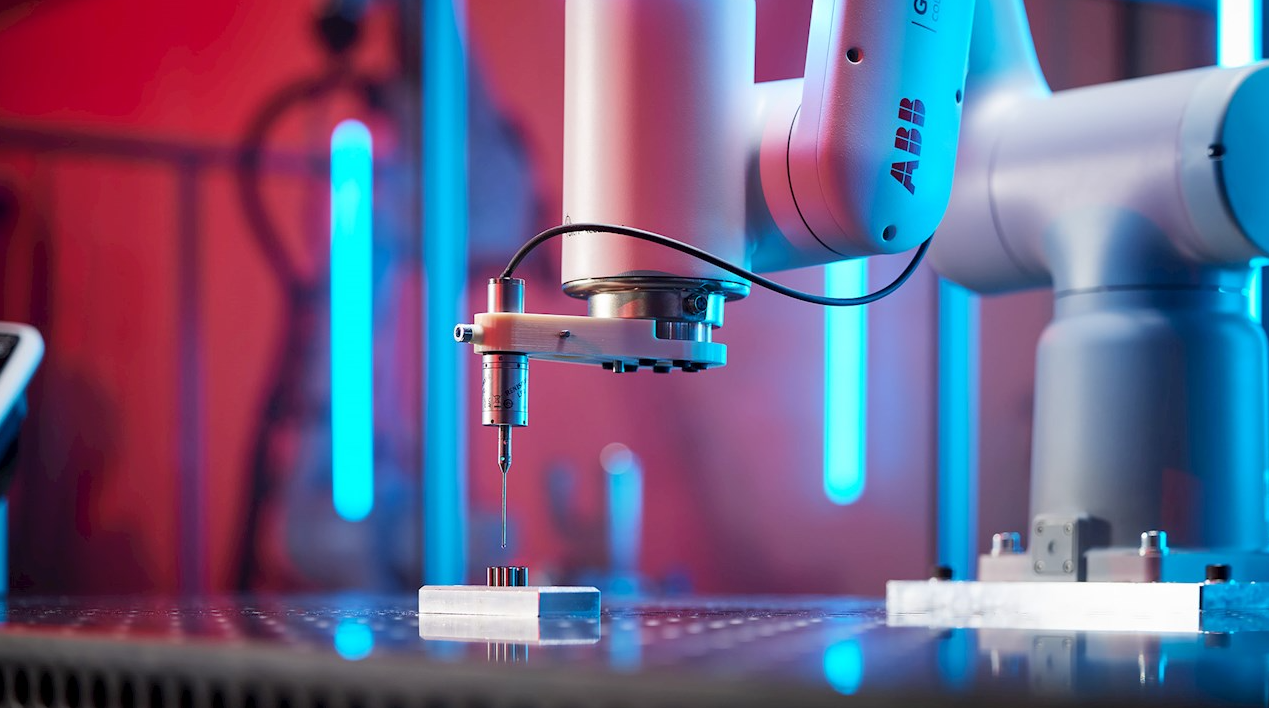
The landscape of industrial automation is undergoing a profound transformation. Once limited to light-duty tasks and power-clamping, collaborative robots (cobots) have matured into robust, intelligent assets. As we navigate 2026, the integration of PLC systems, advanced control systems, and artificial intelligence is redefining what these machines can achieve on the factory floor and beyond.
Cobots Reach Industrial-Grade Performance Standards
The era of cobots being viewed as "toys" for simple pick-and-place tasks has ended. In 2026, manufacturers demand industrial-grade durability and precision. Modern cobots now feature higher payload capacities and extended reach, rivaling traditional factory automation robots.
Engineers have improved repeatability and cycle times through enhanced motion control algorithms. These advancements allow cobots to handle heavy-duty applications like precision automotive assembly and large-scale 3D printing. Consequently, companies can deploy collaborative solutions in environments that previously required caged, high-speed industrial robots.
Automation Expands into Non-Traditional Commercial Sectors
Collaborative technology is migrating from the heavy plant to the laboratory and the kitchen. Sectors like healthcare and hospitality now embrace cobots for their quiet operation and hygienic designs. These "clean-room" ready robots assist in pharmaceutical workflows and diagnostic testing where human error must be minimized.
In commercial bakeries and craft manufacturing, cobots manage repetitive tasks without the need for complex safety fencing. Their compact footprint makes them ideal for small-scale enterprises that lack the space for traditional DCS (Distributed Control Systems) infrastructure.
Solving the Labor Crisis in Hazardous Environments
The industry continues to struggle with "Dirty, Dull, and Dangerous" (DDD) roles. Cobots are filling this gap by taking over welding, surface grit-blasting, and hazardous material handling. Modern interfaces have eliminated the need for deep coding expertise.
Operators now use gesture-based teaching and natural language commands to program paths. This shift empowers the existing workforce to act as robot supervisors rather than manual laborers. By simplifying the human-machine interface, facilities integrate automation faster and reduce workplace injuries significantly.
Collaborative Robots as the Foundation for AI Innovation
Cobots are now the primary platform for testing and scaling AI-driven automation. Their inherent safety and flexibility allow developers to implement real-time machine vision and adaptive path planning safely.
Systems like ABB’s Autonomous Versatile Robotics (AVR™) demonstrate how Generative AI enables robots to learn on the fly. Instead of following rigid code, these machines use 3D AI vision and force sensing to react to environmental changes. This evolution transforms a static tool into an intelligent partner capable of predictive error detection and autonomous task switching.
The Rise of Autonomous Mobile Manipulator Robots (AMMRs)
Mobile manipulation has officially moved from experimental labs to the mainstream market. By mounting a collaborative arm onto an automated mobile platform, companies achieve dynamic automation. These AMMRs navigate factory floors to transport small batches or perform inspections at multiple stations.
This mobility breaks the "fixed-station" constraint of traditional production lines. In 2026, these systems represent a bridge toward more complex humanoid robotics. They offer a versatile solution for intralogistics, allowing a single robot to serve multiple production cells throughout a shift.
Global Safety Standards Synchronize with Rapid Innovation
Regulatory bodies have finally caught up with the pace of technological change. New global guidelines now specifically address AI behaviors and mobile manipulator safety. These frameworks provide a clear roadmap for risk evaluation in shared workspaces.
Standardized regulations give Tier 1 suppliers and SMEs the confidence to scale their robot fleets. When safety requirements are predictable, the transition to fully automated control systems becomes more cost-effective and legally secure for global enterprises.
Author Commentary: A Strategic Shift in Implementation
From my perspective, the most significant change in 2026 is not just the hardware, but the democratization of "intelligence." We are seeing a shift where the PLC programmer and the floor operator use the same intuitive tools to manage complex tasks. However, companies must remain cautious. While AI offers "on-the-fly" learning, maintaining a robust underlying control system architecture is vital for long-term reliability. True success in 2026 lies in balancing cutting-edge AI with the proven stability of industrial-grade engineering.


