

Asisto and Bachmann Power Mammoet’s SK6000 Crane with Advanced Industrial Automation
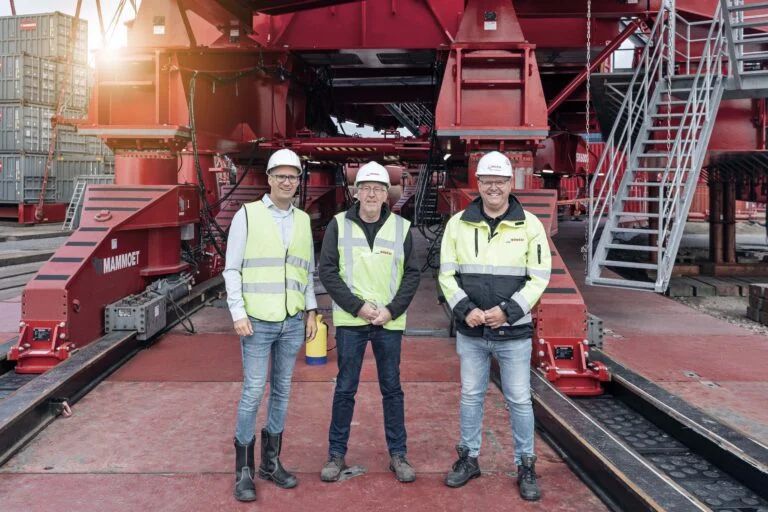
TAGS: #PLC Control Systems #DCS Architecture #Heavy Lift Crane Automation #Bachmann PLC #Asisto System Integration #Factory Automation Solutions
Industrial Automation Drives the SK6000 Crane Project
Mammoet’s SK6000 ring crane represents one of the most powerful heavy-lift solutions worldwide.
To support this engineering milestone, Asisto and Bachmann joined forces on the automation architecture.
Moreover, the partners focused on delivering reliable control systems for extreme lifting operations.
The project demonstrates how industrial automation supports modern heavy transport logistics.
The SK6000 handles massive loads in offshore energy and petrochemical construction projects.
Therefore, its control platform must guarantee precision, safety, and operational transparency.
PLC and DCS Architecture for Heavy Lifting Control Systems
Asisto selected Bachmann automation technology to design the crane’s core PLC and control systems.
The solution integrates programmable logic controllers with distributed I/O and safety modules.
Moreover, the architecture follows industrial best practices for redundancy and deterministic communication.
Engineers implemented real-time control loops to coordinate hoisting, rotation, and load positioning.
The crane operates under complex dynamic loads and variable environmental conditions.
Therefore, the PLC system must react instantly to changing torque and structural forces.
In addition, the DCS layer supervises diagnostics, alarm handling, and system-wide communication.
This layered control approach reflects trends across factory automation and mobile heavy equipment.
Safety-Centric Control Systems in Extreme Environments
Heavy lifting projects demand strict compliance with international safety standards.
As a result, the SK6000 automation design emphasizes fail-safe logic and redundancy.
Bachmann’s modular hardware platform supports safety-rated I/O and certified communication modules.
Moreover, engineers configured the system to maintain safe operation during partial component failures.
From my experience in industrial control retrofits, redundancy often determines project success.
Therefore, integrating safety PLC strategies from the design stage reduces lifecycle risks significantly.
The SK6000 operates in offshore and industrial construction zones with harsh conditions.
However, robust hardware and vibration-resistant assemblies help maintain system integrity.
Digital Integration and Remote Diagnostics in Factory Automation
Modern industrial automation extends beyond basic motion control.
The SK6000 platform includes remote diagnostics and condition monitoring capabilities.
Therefore, operators can analyze system health without direct physical access.
Asisto integrated communication interfaces that enable secure data exchange with supervisory systems.
Moreover, remote service teams can review logs and optimize performance parameters efficiently.
This approach mirrors broader digitalization trends in DCS-driven factory automation environments.
In addition, data transparency improves predictive maintenance and reduces unplanned downtime.
From an operational standpoint, such features significantly lower total cost of ownership.
Collaboration Between Automation Experts and Heavy Engineering Leaders
The partnership between Asisto and Bachmann reflects a practical industrial automation ecosystem.
Bachmann contributes advanced PLC hardware and embedded control expertise.
Meanwhile, Asisto delivers system integration, configuration, and application-specific engineering.
Mammoet benefits from a scalable automation platform tailored to heavy lifting operations.
Therefore, the SK6000 can adapt to evolving project requirements across industries.
This collaborative model aligns with current trends in modular control systems development.
In my view, cooperation between OEMs and automation specialists will shape future crane projects.
Complex machinery increasingly depends on intelligent control software rather than mechanical strength alone.
Industry Impact: Automation in Mega Infrastructure Projects
The SK6000 project highlights how industrial automation supports large-scale infrastructure development.
Control systems now define operational safety and efficiency in heavy engineering sectors.
Moreover, PLC and DCS technologies enable real-time monitoring across distributed mechanical systems.
As offshore wind, LNG, and energy transition projects expand globally, lifting demands increase.
Therefore, cranes require smarter automation platforms with scalable network architectures.
The Asisto and Bachmann collaboration provides a blueprint for similar mega-equipment solutions.
Application Scenario: Automation in Offshore Heavy Lifting
In offshore wind installation projects, cranes must position components weighing thousands of tons.
The SK6000 control systems coordinate multiple hoisting points simultaneously.
Moreover, distributed I/O modules track load distribution and structural stress continuously.
Engineers can integrate the automation platform with site-level DCS infrastructure.
Therefore, project managers gain centralized visibility over lifting operations.
This integration enhances safety, efficiency, and documentation compliance during critical lifts.
Conclusion
The collaboration between Asisto and Bachmann on the SK6000 crane project illustrates modern industrial automation in action.
Advanced PLC and DCS control systems now define reliability in extreme heavy-lift environments.
Moreover, digital diagnostics and safety-driven architecture ensure long-term operational stability.
As heavy industries pursue larger infrastructure projects, intelligent automation will become indispensable.
Therefore, partnerships that combine control engineering expertise with mechanical innovation will lead the market.


