

เครื่องตรวจจับก๊าซหลายชนิดสามารถตรวจจับอะไรได้บ้าง? นี่คือสิ่งที่คุณควรรู้ ⚠️
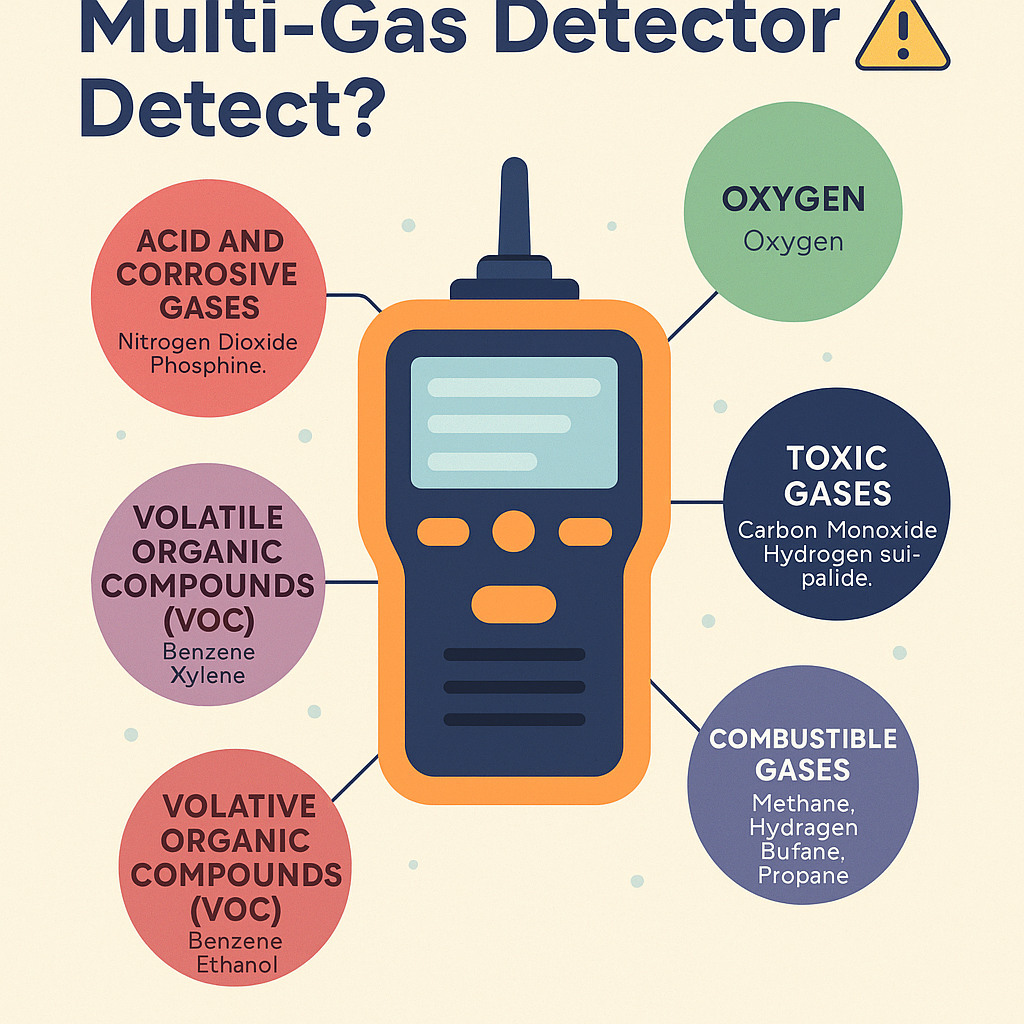
🔧 เครื่องตรวจจับก๊าซหลายชนิดคืออะไร?
เครื่องตรวจจับก๊าซหลายชนิด คืออุปกรณ์เดียวที่ตรวจสอบก๊าซหลายชนิดพร้อมกัน 🎯 ไม่ว่าจะเป็นแบบพกพาหรือแบบติดตั้งถาวร ช่วยรักษาความปลอดภัยในสภาพแวดล้อมอุตสาหกรรมและพื้นที่จำกัดได้อย่างมีประสิทธิภาพมากกว่าการใช้เครื่องตรวจจับก๊าซเดี่ยวหลายเครื่อง
อุปกรณ์เหล่านี้ตรวจจับความเข้มข้นของก๊าซที่เป็นอันตรายโดยการดึงอากาศเข้ามา (แบบแอคทีฟหรือพาสซีฟ) และวิเคราะห์ด้วยเทคโนโลยีเซ็นเซอร์ในตัว เช่น:
-
ปฏิกิริยาอิเล็กโทรเคมี
-
เม็ดตัวเร่งปฏิกิริยา
-
การตรวจจับด้วยอินฟราเรด
-
โฟโตไอออนไนเซชัน
เซ็นเซอร์แต่ละประเภทจะตอบสนองแตกต่างกันขึ้นอยู่กับก๊าซที่ออกแบบมาเพื่อตรวจจับ
🧪 ประเภทของก๊าซที่ตรวจจับได้
1️⃣ ก๊าซกรดและก๊าซกัดกร่อน
-
ก๊าซ: ไนโตรเจนไดออกไซด์ (NO₂), ฟอสฟีน (PH₃), ไฮโดรเจนคลอไรด์ (HCl)
-
ประเภทเซ็นเซอร์: อิเล็กโทรเคมี
-
การใช้งาน: ห้องปฏิบัติการ, โรงงานเคมี, โรงงานเซมิคอนดักเตอร์
2️⃣ VOC (สารประกอบอินทรีย์ระเหยง่าย)
-
ก๊าซ: เบนซีน, ไซลีน, เอทานอล
-
ประเภทเซ็นเซอร์: เครื่องตรวจจับโฟโตไอออนไนเซชัน (PID)
-
การใช้งาน: สี, เคลือบ, โรงกลั่น
3️⃣ การตรวจสอบระดับออกซิเจน
-
ก๊าซ: ออกซิเจน (O₂)
-
ประเภทเซ็นเซอร์: อิเล็กโทรเคมี
-
การใช้งาน: พื้นที่จำกัด, ระบบปรับอากาศ (HVAC), ถังเก็บ
-
📉 ระดับ O₂ ต่ำหรือสูงเกินไปล้วนเป็นอันตราย!
4️⃣ ก๊าซพิษ
-
ก๊าซ: คาร์บอนมอนอกไซด์ (CO), ไฮโดรเจนซัลไฟด์ (H₂S), แอมโมเนีย (NH₃), ซัลเฟอร์ไดออกไซด์ (SO₂), คลอรีน (Cl₂)
-
ประเภทเซ็นเซอร์: อิเล็กโทรเคมี
-
การใช้งาน: เหมืองแร่, น้ำมันและก๊าซ, การบำบัดน้ำ
5️⃣ ก๊าซไวไฟ
-
ก๊าซ: มีเทน (CH₄), ไฮโดรเจน (H₂), บิวเทน (C₄H₁₀), โพรเพน (C₃H₈)
-
ประเภทเซ็นเซอร์: เม็ดตัวเร่งปฏิกิริยาหรืออินฟราเรด
-
การใช้งาน: ท่อส่งก๊าซ, โรงงาน LNG, โรงงานเคมี
📊 สิ่งที่ควรตรวจสอบก่อนซื้อ
เมื่อเลือกเครื่องตรวจจับก๊าซหลายชนิด ให้พิจารณา:
✅ จำนวนก๊าซที่สามารถตรวจจับได้
✅ ประเภทเซ็นเซอร์ที่ใช้
✅ การปฏิบัติตามมาตรฐานความปลอดภัย
✅ ระดับการป้องกันน้ำและความทนทาน (IP rating)
✅ ตัวเลือกการเชื่อมต่อ (บลูทูธ, Modbus, อินเทอร์เฟซ PLC)
⚖️ ข้อดีและข้อเสียของเครื่องตรวจจับก๊าซหลายชนิด
| ✅ ข้อดี | ⚠️ ข้อเสีย |
|---|---|
| ตรวจจับก๊าซได้ถึง 5–6 ชนิดพร้อมกัน | หากเสียจะทำให้ระบบทั้งหมดหยุดทำงาน |
| ประหยัดค่าใช้จ่ายกว่าการใช้เครื่องตรวจจับหลายเครื่อง | อาจต้องปรับเทียบบ่อยครั้ง |
| ขนาดกะทัดรัดและพกพาง่าย | การเปลี่ยนเซ็นเซอร์อาจมีค่าใช้จ่ายสูง |
| สามารถเชื่อมต่อกับระบบ PLC ได้ | ข้อจำกัดในการปรับแต่งหากไม่ใช่แบบโมดูลาร์ |
💼 ในระบบอัตโนมัติอุตสาหกรรม?
หากคุณทำงานในโรงงานที่ควบคุมด้วย DCS หรือ PLC เครื่องตรวจจับก๊าซหลายชนิดที่มี เอาต์พุต Modbus หรือ 4-20 mA สามารถรวมเข้ากับระบบตรวจสอบของคุณได้อย่างราบรื่น
🔗 ต้องการชิ้นส่วนอัตโนมัติด้วยไหม?
เราที่ PLCDCSPRO มีสต็อกชิ้นส่วนอัตโนมัติอุตสาหกรรมหลากหลายชนิด—รวมถึง เซ็นเซอร์, โมดูล PLC และชิ้นส่วนระบบควบคุม


