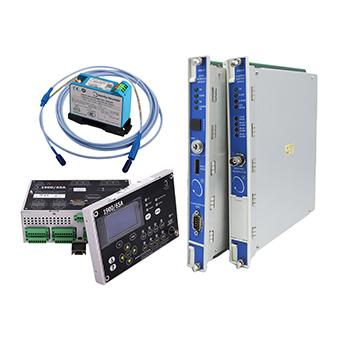
Thermocouple Converter: The Cornerstone of Industrial Precision

Thermocouple Converter: The Cornerstone of Industrial Precision

Understanding the Seebeck Effect in Practice

Thermocouples generate voltage due to temperature differences — the Seebeck Effect. Different metal pairs produce unique voltage profiles; for example, a Type-K thermocouple outputs ~4.096 mV at 100°C. Converters make these voltages meaningful.

ITS-90 Standard: The Backbone of Accuracy

I rely on the ITS-90 standard and NIST polynomial coefficients for consistent conversions. Using ITS-90 supports calibration, validation, and cross-industry consistency.

Millivolt to Celsius: A Two-Way Street

Converters work both ways: mV → °C for diagnostics and °C → mV for calibration checks. This dual capability improves flexibility and simplifies field work.

Choosing the Right Thermocouple Type

Select the sensor to match the temperature range and environment: Type-T for low temperatures, Type-B for very high temperatures, etc. Proper selection avoids measurement errors and equipment damage.

Cold Junction Compensation: A Critical Step

Always apply cold junction compensation. It corrects for ambient temperature at the reference junction; most converters include it but verify during setup to maintain accuracy.

Field Tips That Improve Reliability

  • Inspect thermocouple wires for corrosion and damage.
  • Shield cables to reduce electromagnetic interference.
  • Perform regular calibration and log results.

Software vs Hardware Converters

Use software converters for quick checks; deploy hardware modules for integration into control systems. Choose based on operational needs.

Educational Value for New Engineers

Converters provide great hands-on demos, helping trainees link voltage to temperature and understand sensor behavior faster.

Final Thoughts: Precision Starts with Conversion

Thermocouple converters are essential for turning raw sensor output into actionable, accurate temperature data. Follow ITS-90, keep junctions compensated, use genuine parts, and maintain good cabling practices to ensure long-term measurement reliability.

Show All
Blog posts
Show All
Software-Defined Manufacturing: A New Era of Industrial Automation

Software-Defined Manufacturing: A New Era of Industrial Automation

In the aerospace sector, SDM has proven invaluable for improving production efficiency and reducing costs. One manufacturer implemented an SDM solution to optimize the production of aircraft components. By integrating AI and machine learning into their manufacturing systems, the company could adjust production schedules and allocate resources based on real-time demand, minimizing waste and delays. As a result, the manufacturer was able to reduce lead times, lower costs, and increase production flexibility, allowing them to meet customer demands with greater efficiency.

Rockwell Automation: Advancing Towards Autonomous Operations with AI and Industrial Data Integration
plcdcspro

Rockwell Automation: Advancing Towards Autonomous Operations with AI and Industrial Data Integration

In practice, predictive maintenance has revolutionized manufacturing operations. For example, a large automotive manufacturer implemented AI-powered predictive maintenance across its global production lines. By analyzing real-time sensor data, the system predicted when machines were likely to fail, allowing maintenance teams to intervene before breakdowns occurred. This proactive strategy significantly reduced downtime and saved the company millions in repair costs, while also extending the operational life of the machines. The success of this program highlighted the potential for AI and automation to transform maintenance practices across industries.

ABB Strengthens Grid Automation with Netcontrol Acquisition to Meet Growing Demand for Digitalized Power Grids
plcdcspro

ABB Strengthens Grid Automation with Netcontrol Acquisition to Meet Growing Demand for Digitalized Power Grids

In real-world applications, ABB's grid automation solutions, combined with Netcontrol's technologies, can significantly improve the management of complex power grids. For instance, utilities facing the challenge of integrating increasing amounts of renewable energy can utilize predictive analytics to better forecast demand and optimize power flow. In regions prone to extreme weather, such as hurricanes or heatwaves, automation can enhance grid resilience by enabling rapid recovery and minimizing downtime during disruptions.