

The Pulse of Industry 4.0: Navigating the Global Automation Cable Evolution Through 2030
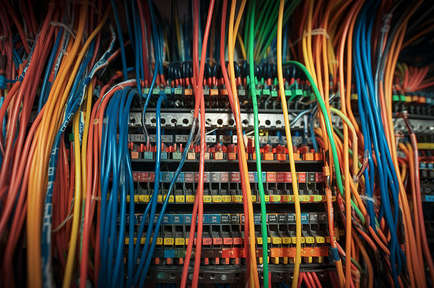
The Nervous System of Industry 4.0: Market Evolution Through 2030
The global industrial automation cable market is currently experiencing a transformative phase. As of early 2026, the market has reached a valuation of $9.5 billion, maintaining a steady CAGR of 8.2%. While the numbers are impressive, the real story lies in the transition from simple power delivery to sophisticated, high-speed data transmission. We are moving toward a future where "ruggedized" and "intelligent" are the baseline requirements for every connection on the plant floor.
From Power to Precision: Understanding the Modern Cable’s Role
In my experience on the field, an automation cable is far more than a copper conductor. These are engineered components designed to withstand the "Three Ms": Motion, Moisture, and Magnetism (EMI). Whether it is a servo motor cable managing high-voltage pulses or a shielded Ethernet cable ensuring microsecond-level synchronization between a PLC and its I/O, these cables are the backbone of operational uptime. As we integrate more sensors and actuators, the demand for hybrid cables—combining power and data in a single jacket—is becoming a standard for space-saving designs.
Robotic Proliferation: The Primary Catalyst for Growth
The most aggressive driver of this market is the sheer density of robotics in modern manufacturing. With over 4.2 million industrial robots operational globally as of late 2024, we are seeing a specialized demand for "torsion-rated" and "high-flex" cabling. Unlike stationary machinery, a six-axis robot requires cables that can survive millions of bend cycles without signal degradation. This surge in robotics isn't just a trend; it's a fundamental shift in how we build, and it’s why we expect the market to hit nearly $12.5 billion by 2030.
Technical Trends: IIoT, Fiber Optics, and the Smart Factory
We are witnessing a significant shift in the technical specifications requested by site managers. The rise of the Industrial Internet of Things (IIoT) has made high-speed industrial Ethernet and fiber optics non-negotiable.
-
Fiber Optics: Now essential for long-distance, EMI-immune data transfer.
-
Ruggedization: Increased demand for cables that resist oils, chemicals, and extreme temperatures.
-
Cybersecurity: Physical layer security is becoming a talking point, ensuring that cables are shielded against sophisticated electronic eavesdropping in sensitive environments.
Regional Dynamics: The Rise of Asia-Pacific and European Stability
While Europe currently holds the crown for market share due to its early adoption of Industry 4.0 standards in automotive and aerospace, the Asia-Pacific region is the one to watch. Driven by aggressive smart-factory initiatives in China, South Korea, and India, APAC is projected to be the fastest-growing region. For engineers and suppliers, this means adapting to a variety of international standards while keeping up with the high-volume production needs of the East.


