

The Convergence of EVs and Robotics: Driving the Next Era of Industrial Automation
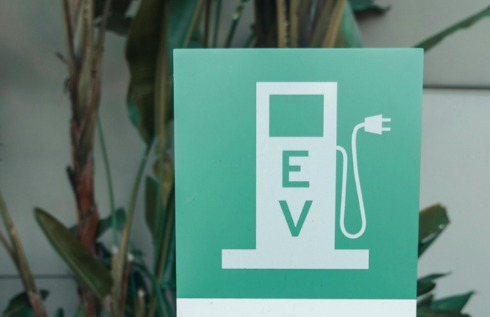
In 2026, electric vehicles (EVs) and advanced robotics have transitioned from futuristic laboratory experiments to the backbone of global commerce. This rapid proliferation stems from a "perfect storm" of technological maturity and economic necessity. As industrial automation reaches new heights, the lines between transport and stationary machinery are blurring. Today, the same high-performance control systems that manage a factory floor are now navigating city streets.
A Technological Synergy: Powering the Mainstream
The sudden ubiquity of these technologies relies on the convergence of three critical factors: high-density battery storage, affordable processing power, and sophisticated AI software. For years, these trends developed in isolation. However, their recent synchronization allows factory automation to handle real-world complexities that were previously impossible. Consequently, machines can now operate safely in unpredictable environments, ranging from busy hospital corridors to dynamic warehouse docks.
Electrification: From Niche Projects to Global Standards
A decade ago, electric vehicles were often viewed as limited and expensive novelties. This perception has vanished. Modern EVs now offer superior performance and lower long-term maintenance costs compared to internal combustion alternatives. Leading automakers have invested billions into dedicated EV platforms, shifting the focus from horsepower to software-driven efficiency. This shift mimics the evolution of DCS (Distributed Control Systems), where centralized intelligence manages vast networks of interconnected components.
Robotics Step Out of the Safety Cage
Historically, industrial robots remained bolted to the floor behind heavy safety fences. They performed repetitive tasks with high precision but lacked any real adaptability. Today, modern robots "see" and "learn" thanks to advanced machine vision and sensor fusion. Retail giants and logistics providers now deploy autonomous mobile robots (AMRs) that work alongside human staff. These systems utilize PLC (Programmable Logic Controllers) and edge computing to make split-second decisions, significantly speeding up order fulfillment.
AI: The Intelligent Engine of Automation
Artificial Intelligence serves as the invisible glue connecting EVs and robotic systems. In a vehicle, AI manages battery health and autonomous navigation; in a robot, it enables object recognition and path planning. Companies like NVIDIA provide the high-performance chips required to process this sensory data in real time. Because these AI models improve with every mile driven or task completed, we are witnessing a "flywheel effect" that accelerates adoption across all sectors.
Economic Realities Overcome the Hype
While media coverage often focuses on "cool" technology, the true driver of this revolution is the bottom line. Businesses face persistent labor shortages and rising operational costs. Automation provides a scalable solution that ensures consistency and 24/7 productivity. Moreover, strict environmental regulations make electrification the most viable path for managing long-term risk. In 2026, deploying a robot or an EV is no longer an experiment; it is a calculated operational necessity.
Author Commentary: The Software-Defined Future
From my perspective, the most significant takeaway is that hardware is becoming a commodity. The real value now resides in the software layer—the "brain" that coordinates the PLC, sensors, and actuators. Whether it is a car or a robotic arm, the device is essentially a mobile computer. For B2B stakeholders, this means the most critical investment is no longer just the machine itself, but the digital ecosystem that supports it.


