

Physical AI: Revolutionizing Industrial Automation through Intelligent Embodiment
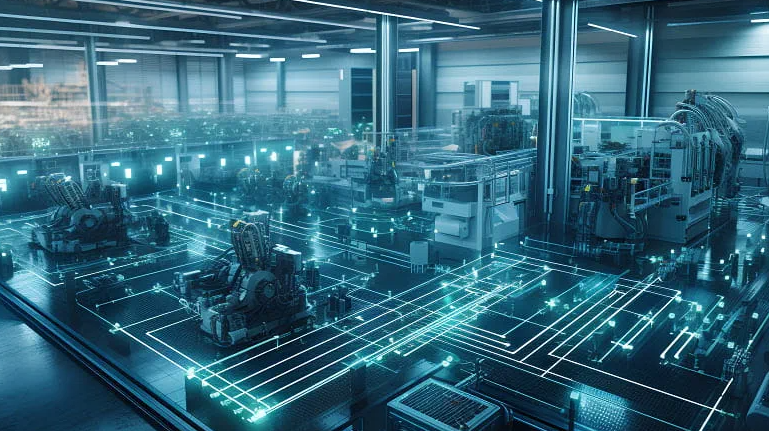
The fusion of artificial intelligence and robotics has created a new frontier known as Physical AI. Unlike traditional software, Physical AI grounds decision-making in real-world sensory data. This technology allows machines to perceive, reason, and act within a unified loop. Consequently, industrial robots are moving beyond repetitive tasks to master complex, unstructured environments. This shift promises to redefine efficiency and adaptability across global manufacturing sectors.
Transitioning from Fixed Logic to Contextual Awareness
For decades, factory automation relied on rigid, rule-based programming. Engineers programmed every move into a PLC or robot controller. However, Physical AI introduces context-aware capabilities. Robots can now interpret dynamic shop-floor conditions and adjust their behavior instantly. Therefore, they no longer require constant re-programming when a part position changes slightly. This intelligence turns isolated machines into collaborative partners that work safely alongside human operators.
Breakthroughs in Learning and Robotic Control
Several technological pillars support this evolution. One-shot and zero-shot learning allow robots to perform new tasks after seeing just one example. Moreover, reinforcement learning rewards machines for successful outcomes, much like a digital training process. In addition, developers now use Large Language Models (LLMs) to bridge the gap between human intent and machine code. These models translate simple English commands into precise, low-level motion instructions for the robot.
Enhancing Existing Control Systems with AI
A significant advantage of Physical AI is its compatibility with current infrastructure. Manufacturers do not always need to replace their existing control systems. Instead, they can retrofit legacy robots with advanced perception modules and edge AI. These upgrades enable features like dynamic torque adjustment and real-time anomaly detection. As a result, older hardware gains a second life, performing tasks with newfound dexterity and precision.
Navigating Data Challenges and Safety Standards
Despite the rapid progress, widespread adoption faces hurdles. Effective Physical AI requires massive amounts of high-quality data. To solve this, industry leaders are releasing open datasets that include synchronized video and force-torque measurements. Furthermore, manufacturers must ensure these AI models meet strict ISO safety certifications. Establishing robust data pipelines is essential for validating these systems against rigorous industrial tolerances and regulatory requirements.
Author’s Insight: The Strategic Value of Agentic Robots
In my view, the most exciting development is the rise of "agentic" capabilities. We are moving toward robots that can self-optimize and learn from their own mistakes over time. This autonomy reduces the burden on maintenance teams and speeds up production re-tooling. However, companies must prioritize cybersecurity as these robots become more connected. A secure, AI-driven facility is not just faster; it is more resilient to market fluctuations and labor shortages.


