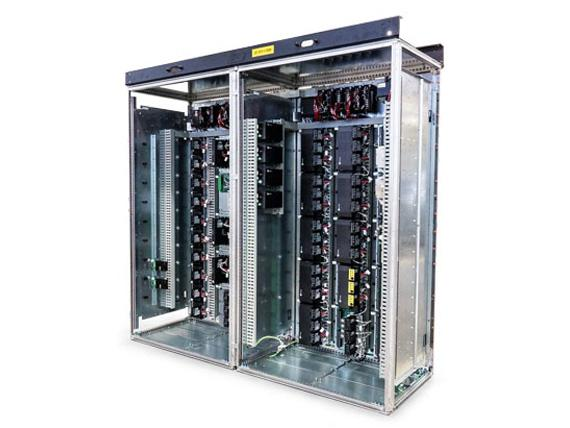
Exploring GE Fanuc Mark VIe: Key Control and Interface Modules

Exploring GE Fanuc Mark VIe: Key Control and Interface Modules

The GE Fanuc Mark VIe control system is an advanced platform for managing and monitoring industrial automation systems, especially in power generation and heavy-duty industrial environments. Known for its reliability, adaptability, and precise control, the Mark VIe system is widely applied in gas turbines, hydro turbines, and other complex machinery that requires detailed management. The Mark VIe system includes a suite of modules, boards, and control cards, each of which contributes to system functionality, reliability, and operational safety.

GE Fanuc's range of industrial automation products includes various control modules, interface boards, terminal boards, and circuit boards designed for demanding environments and critical control applications. These products are widely used in industries such as gas turbines, power generation, and other heavy machinery automation, enhancing reliability, precision, and control capabilities. This lineup includes the IS200AEPGG1AAA Drive Control Module, IS200TBAIH1CCC Analog Input Terminal Board, IS200WETAH1AEC Board, among others. Each product offers specific functionalities suited to complex industrial systems, with robust designs to handle high-performance demands in automation processes.

Below is a table summarizing each module, along with links for further details.

Model

Description

Link

IS200AEPGG1AAA

Drive Control Module

Link

0520-01540D-1

PC Board

Link

DS200ADGIH1AAA

Auxiliary Interface Board

Link

IS200TBAIH1CCC

Analog Input Terminal Board

Link

IS210BPPCH1AC

I/O Pack Processor Board

Link

IS200WETAH1AEC

Board

Link

IS200AEPAH1ACB

PCB Circuit Board

Link

IS200AEPAH1AFD

Printed Circuit Board

Link

IS200AEPAH1AHD

PLC Module

Link

IS200WETBH1BAA

Gas Turbine Control Card

Link

IS200WETBH1ABA

Printed Circuit Board

Link

Show All
Blog posts
Show All
Software-Defined Manufacturing: A New Era of Industrial Automation

Software-Defined Manufacturing: A New Era of Industrial Automation

In the aerospace sector, SDM has proven invaluable for improving production efficiency and reducing costs. One manufacturer implemented an SDM solution to optimize the production of aircraft components. By integrating AI and machine learning into their manufacturing systems, the company could adjust production schedules and allocate resources based on real-time demand, minimizing waste and delays. As a result, the manufacturer was able to reduce lead times, lower costs, and increase production flexibility, allowing them to meet customer demands with greater efficiency.

Rockwell Automation: Advancing Towards Autonomous Operations with AI and Industrial Data Integration
plcdcspro

Rockwell Automation: Advancing Towards Autonomous Operations with AI and Industrial Data Integration

In practice, predictive maintenance has revolutionized manufacturing operations. For example, a large automotive manufacturer implemented AI-powered predictive maintenance across its global production lines. By analyzing real-time sensor data, the system predicted when machines were likely to fail, allowing maintenance teams to intervene before breakdowns occurred. This proactive strategy significantly reduced downtime and saved the company millions in repair costs, while also extending the operational life of the machines. The success of this program highlighted the potential for AI and automation to transform maintenance practices across industries.

ABB Strengthens Grid Automation with Netcontrol Acquisition to Meet Growing Demand for Digitalized Power Grids
plcdcspro

ABB Strengthens Grid Automation with Netcontrol Acquisition to Meet Growing Demand for Digitalized Power Grids

In real-world applications, ABB's grid automation solutions, combined with Netcontrol's technologies, can significantly improve the management of complex power grids. For instance, utilities facing the challenge of integrating increasing amounts of renewable energy can utilize predictive analytics to better forecast demand and optimize power flow. In regions prone to extreme weather, such as hurricanes or heatwaves, automation can enhance grid resilience by enabling rapid recovery and minimizing downtime during disruptions.