

Automation Drives Growth: Why Robots Are Expanding the UK Manufacturing Workforce
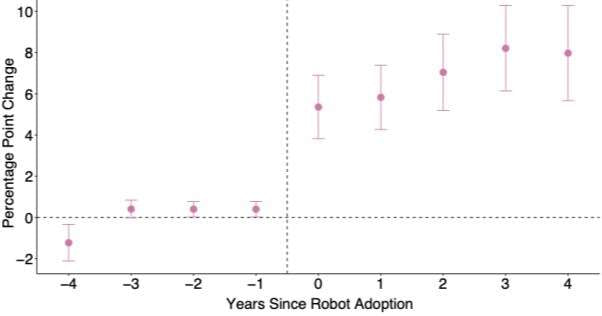
For decades, the narrative surrounding industrial automation suggested that machines would inevitably replace human workers. However, recent data from the London School of Economics (LSE) tells a different story. By analyzing 27,000 manufacturing sites, researchers found that integrating robots and control systems actually triggers significant workforce expansion.
The Productivity Power of Industrial Robots
When a factory adopts industrial robots for the first time, employment typically grows by 8% within four years. This growth happens because the efficiency gains from factory automation outweigh any immediate job displacement. As robots handle repetitive tasks, the firm becomes more competitive. Consequently, increased market share allows these companies to scale their operations and hire more staff.
CNC Machines and the Scaling Effect
The impact of CNC (Computer Numerical Control) machines is equally impressive, showing a 6% rise in employment for new adopters. For plants that already utilize CNC technology, scaling up leads to a 9% employment surge. This suggests that automation acts as a platform for growth rather than a simple replacement tool. Furthermore, these firms often see a shift in workforce composition toward engineering and design roles.
How Automation Enhances Market Competitiveness
A common fear is that automated firms cannibalize the business of their competitors. Interestingly, the LSE research found no evidence of this negative trend. Instead, "automation waves" often lift the entire industry. When a leader adopts advanced PLC (Programmable Logic Controller) systems, it often stimulates demand across the local supply chain. As a result, even peer companies frequently see neutral or positive employment changes.
Shifting Roles from Manual Labor to Technical Expertise
Automation does not just add jobs; it transforms them by moving workers to higher-value tasks. Employees move away from manual material handling and toward control systems programming, quality assurance, and maintenance. This shift requires a robust internal training strategy. In my view, the most successful manufacturers treat automation as a long-term learning curve rather than a "plug-and-play" solution.
Lessons from International Automation Trends
The UK findings align with global data from France and Finland. In France, major investments in modern manufacturing plants led to a 20% employment increase over five years. Similarly, Finnish SMEs that utilized technology grants saw workforce growth of 23%. These figures prove that industrial automation serves as a catalyst for economic resilience and corporate expansion worldwide.
Strategies for Effective Technology Diffusion
For manufacturers to see the best returns, they must build complementary capabilities early on. This involves investing in staff who can manage DCS (Distributed Control Systems) and complex workflows. Policymakers should focus on helping mid-sized plants access finance and technical training. Because the largest gains appear after the "learning phase," long-term support is more valuable than one-off subsidies.


